AFR Systems
RDF Production (Shredding Line)
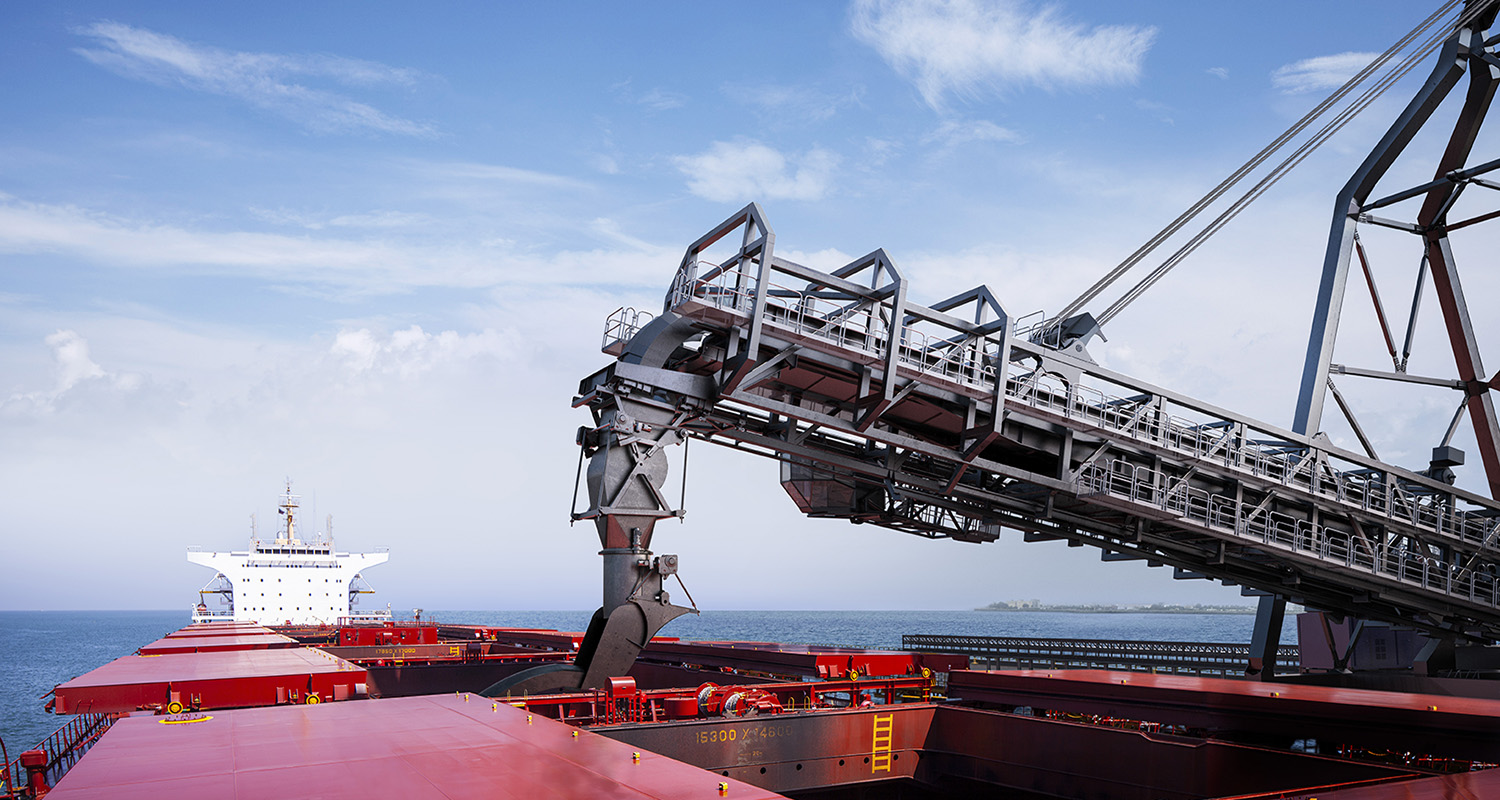
PH1’s RDF production and waste processing systems are designed to convert diverse waste streams – including industrial waste, mixed municipal solid waste (MSW), paper and pulp waste, textile waste, and agricultural biomassu – into consistent, high-calorific refuse-derived fuel (RDF).
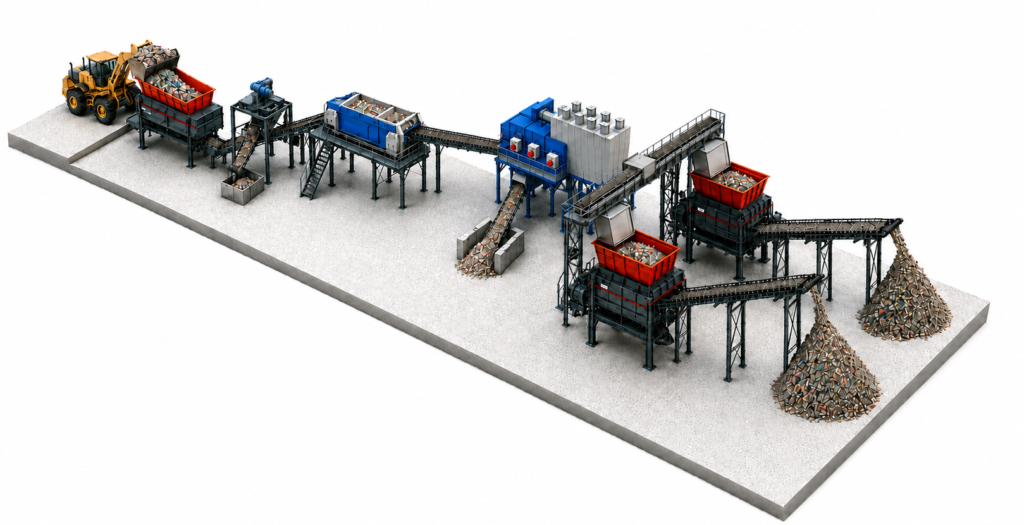
Our high-capacity, modular RDF processing lines integrate shredding, screening, separation, and conditioning to deliver uniform particle size, clean fuel fractions, and reliable calorific value. Engineered for high uptime and continuous operation, PH1’s RDF systems are ideally suited for cement plant co-processing and waste-to-energy (WTE) applications.
Benefits of the PH1 Integrated Shredding Line
- Handles a Wide Range of Waste Materials
Capable of processing industrial, municipal, paper & pulp, textile, and agricultural biomass, ensuring consistent shredding for RDF, SRF, and recycling applications.
- Fully Integrated & Seamless Operation
PH1 manages complete system integration, combining shredders, screens, separators, and conveyors into a single automated line – eliminating the need to approach multiple equipment suppliers.
- Reduced Operational Costs & Maintenance
- ATEX-Compliant & Advanced Fire Safety Protection
- Optimized Resource Use & Sustainability
Enhances RDF/SRF quality, increases waste-to-energy conversion efficiency, and reduces reliance on virgin fuel, supporting plant sustainability goals.
- High Throughput & Efficiency
- Modular & Customizable
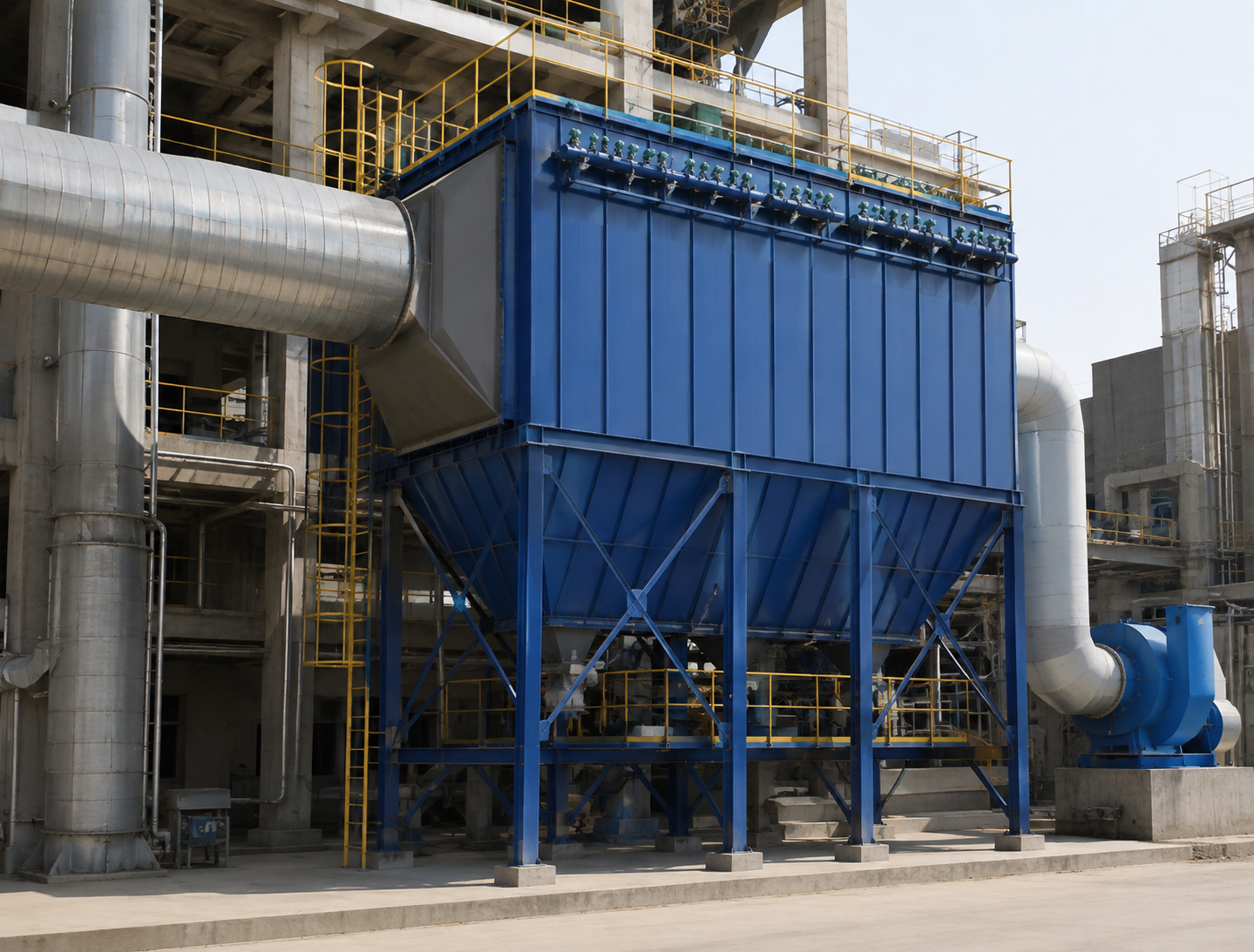
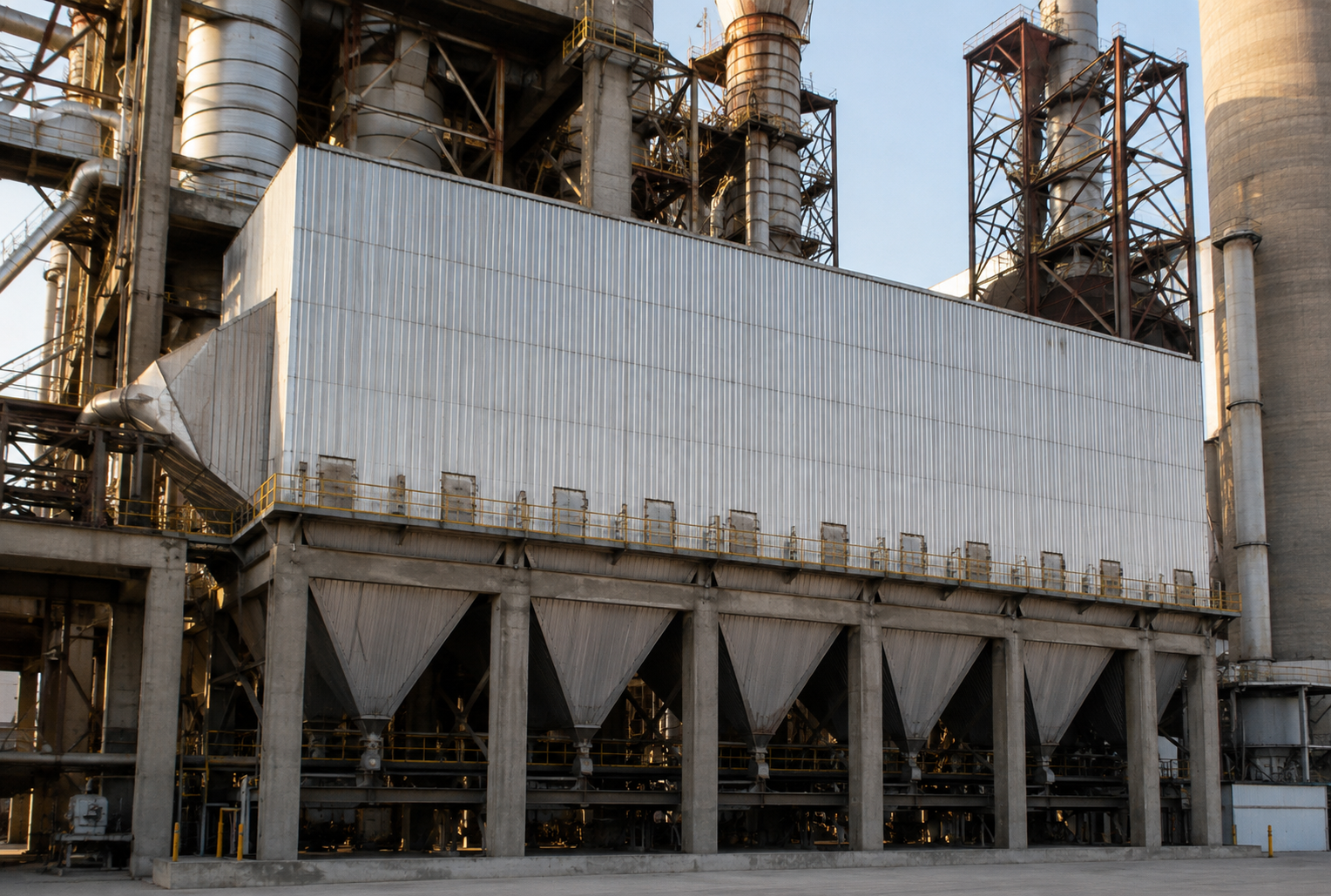
- Dust-Controlled & Safe Operation
- Proven Track Record
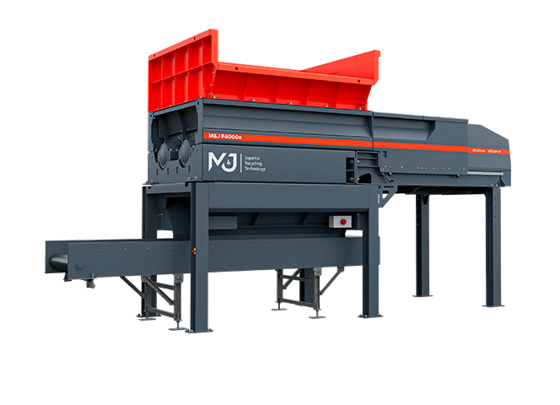
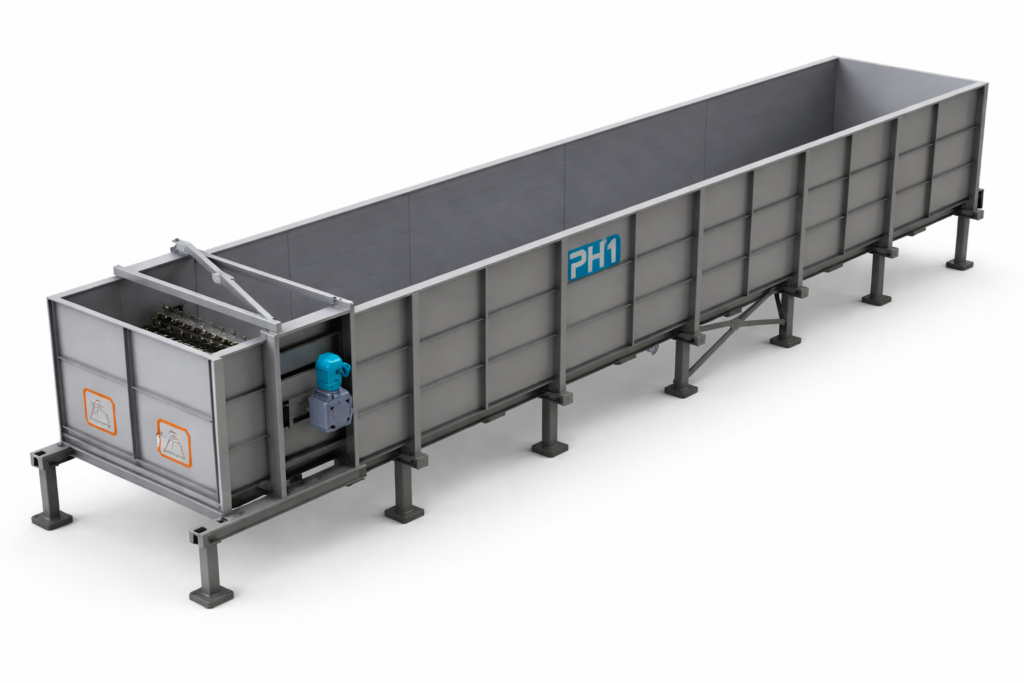
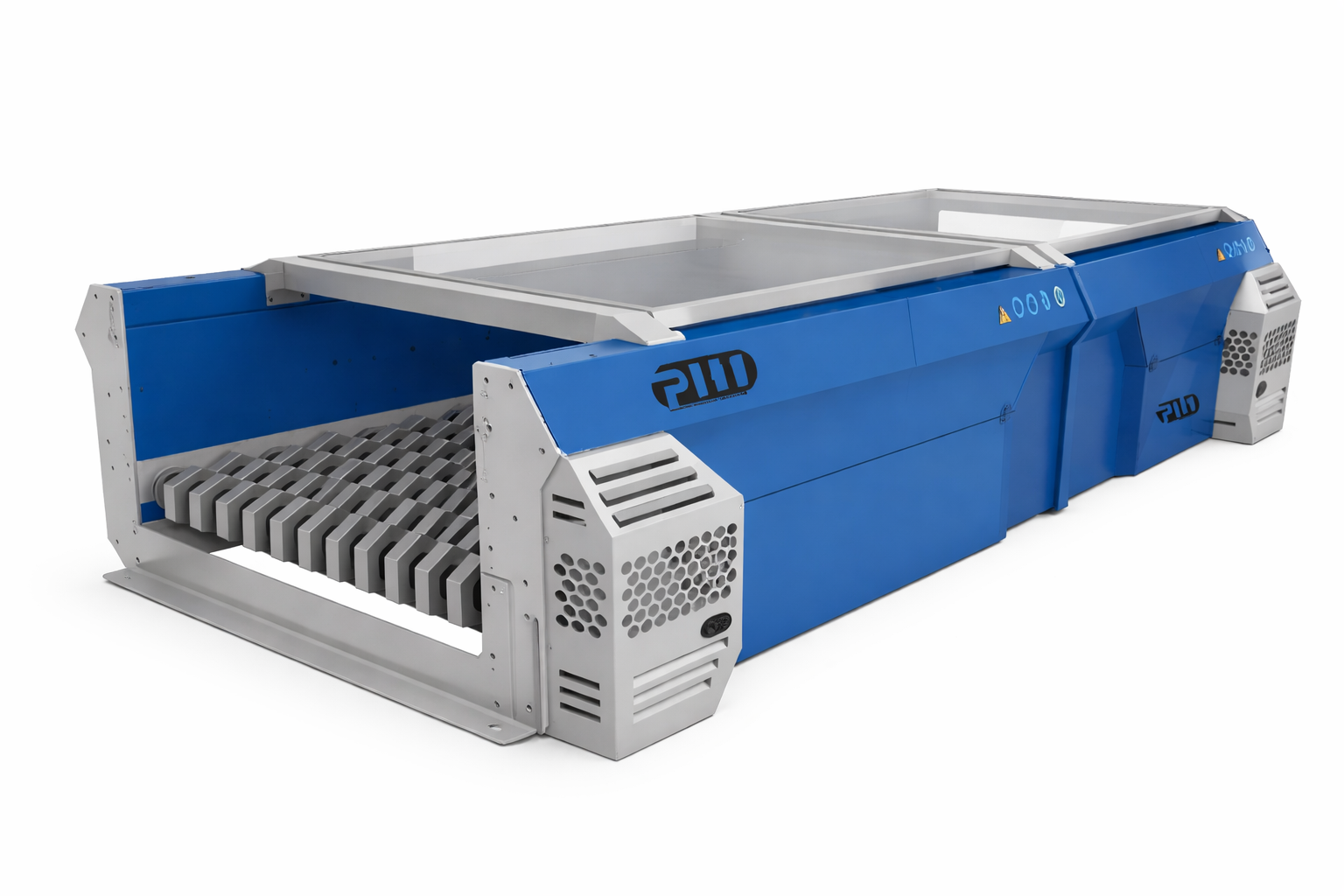
Primary Shredders Industrial Waste & Bulk Reduction
Primary shredders (pre-shredders) form the first stage of industrial waste processing, designed to handle large, bulky, and difficult materials. Engineered for high-torque, heavy-duty operation, they ensure efficient size reduction and reliable feed preparation for downstream sorting, RDF production, and waste-to-energy processes.
Key Features
- Handles bulky and mixed waste streams including industrial waste, commercial refuse, MSW, C&D debris, plastics, textiles, and bulky paper/cardboard.
- High-torque, slow-speed shredding for reliable reduction of tough and irregular materials with low risk of jams.
- Robust mechanical design built for continuous duty cycles, heavy loads and abrasive materials.
- Available in variable configurations (e.g., hook and rasper type) to suit waste composition and input needs.
- Hydraulic and electric drive options to match plant power strategies and control requirements.
Waste Types
- Mixed Municipal Solid Waste (MSW)
- Industrial & commercial waste
- Bulky and oversized items
- Construction & demolition waste
- Textiles, cardboard, paper bales
- Plastics and composite materials

Capacity
Up to 125tph

Size
Down to 100mm
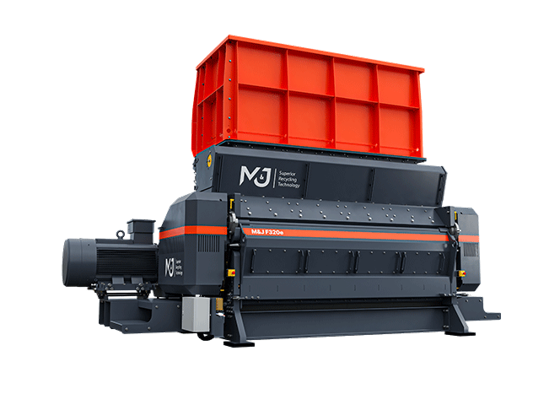
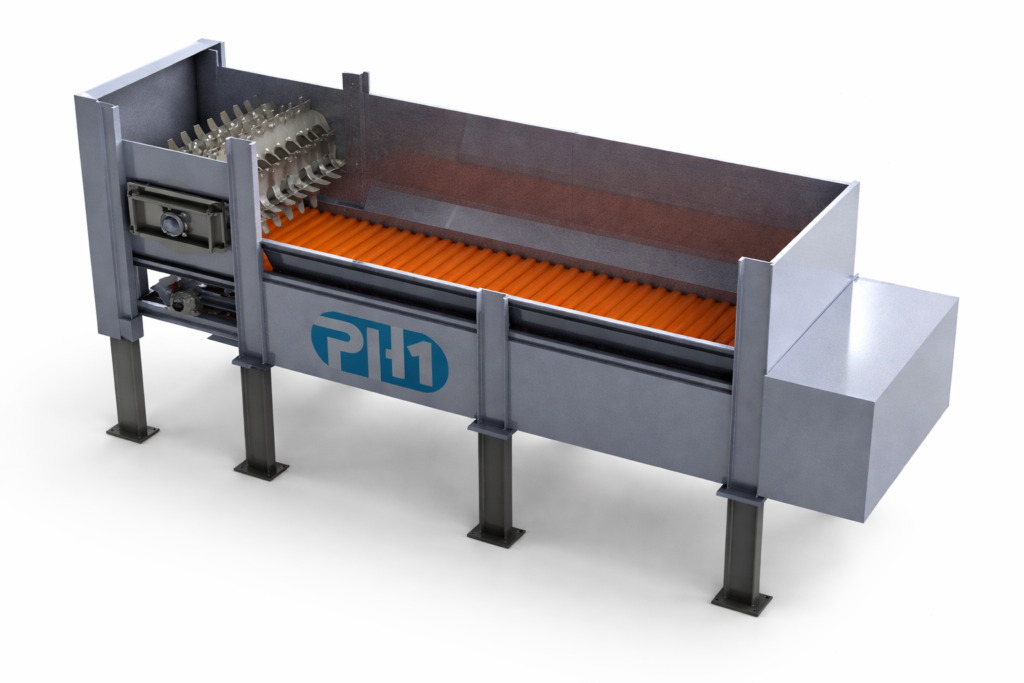
Secondary Shredders: Precision Size Reduction & RDF/SRF Quality
Key Features
- Designed for precision size reduction and homogenisation, producing a clean, consistent feed for fuel or recycling processes.
- High rotor speed and refined cutting geometry tailor output sizes for specific end-use requirements.
- Built for durability under continuous operation with replaceable wear parts and adaptable screens.
- Available with hydraulic or electric power options and multiple shaft types for flexibility.
Waste Types
- Pre-shredded industrial waste
- Municipal solid waste (MSW) fractions
- Paper, cardboard, and pulp residues
- Textile and fibre-rich wastes
- Biomass, plastics, and mixed sorted feed streams

Capacity
Up to 28tph

Size
Down to 15-50 mm
Screening
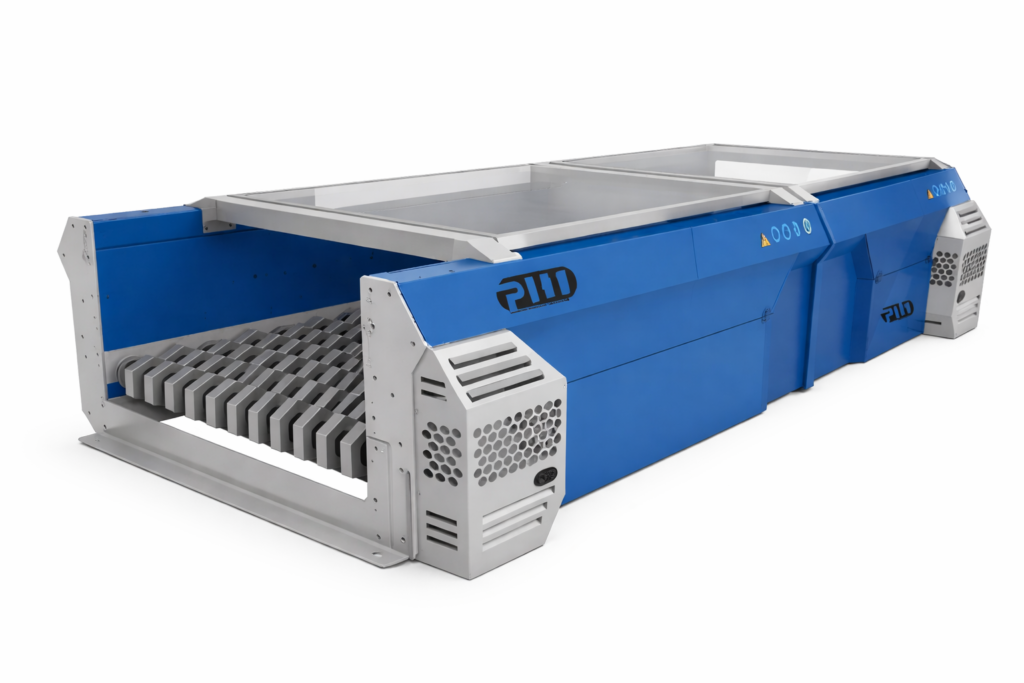
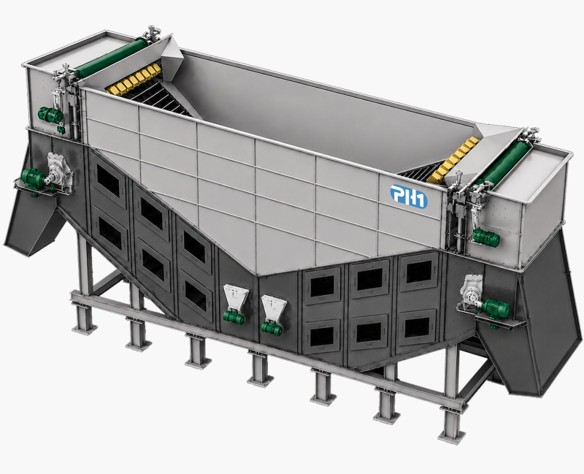
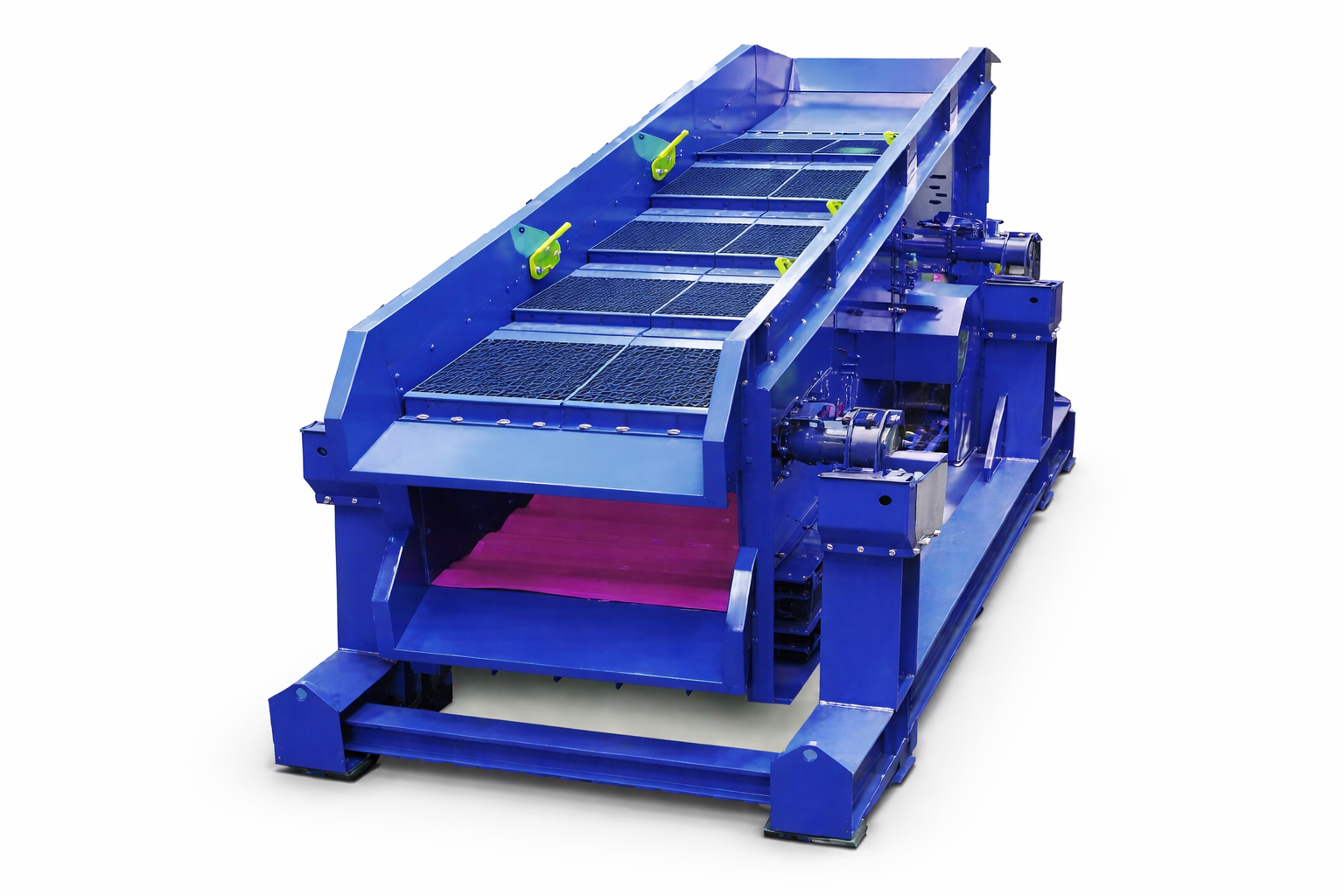
Flip-Flop Combi Screen: High-Efficiency Screening for Difficult Waste Streams
Key Features
- Classifies challenging waste streams with separation cuts ranging from 0.2 mm to 120 mm, covering fine to coarse fractions.
- Advanced vibrating flip-flop technology ensures near blockage-free operation on both upper and lower decks, even with moist or adhesive materials.
- 3D screening elements on the lower deck ensure accurate grain sizing, preventing the passage of long pieces and unwanted contaminants.
- Dual-deck, combined system integrates two screening stages into one compact machine.
Benefits
- Reliable screening performance for wet, sticky, and high-contamination waste where conventional screens struggle.
- Improved RDF and SRF quality through precise fraction separation and reduced oversize carry-over.
- Significant savings in conveying equipment, steel structures, installation space, and overall CAPEX.
- Higher uptime and reduced maintenance due to self-cleaning screening action.
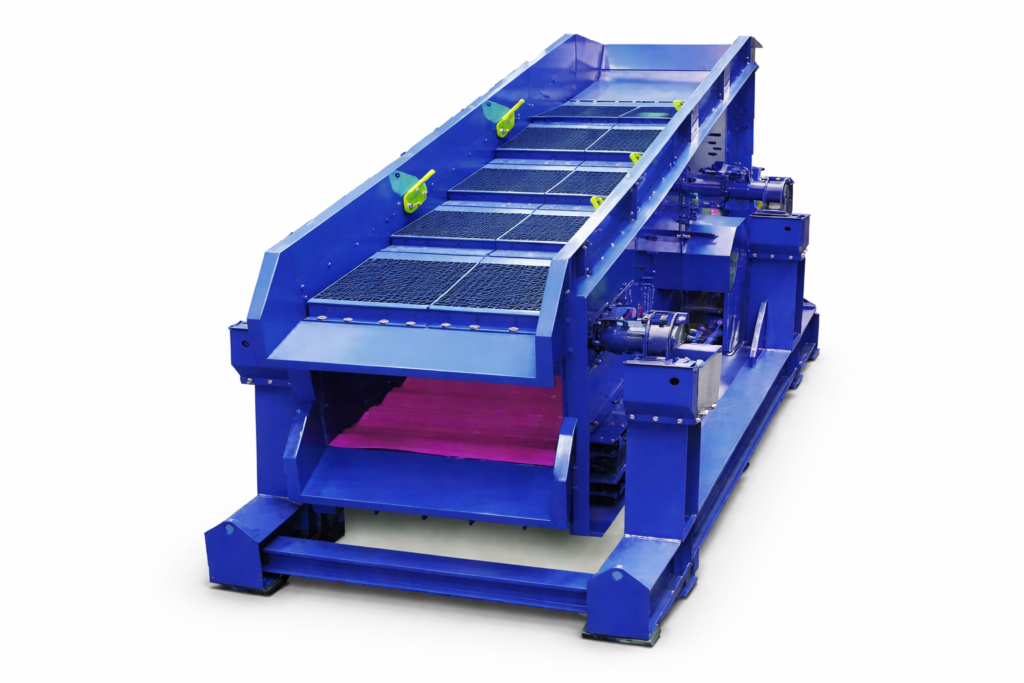
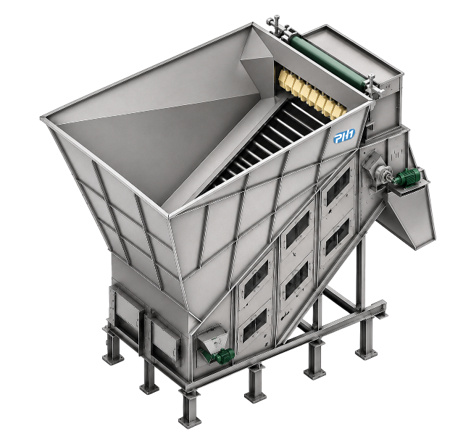
Dynamic Screen: Precision Sizing for Mixed and Single-Stream Waste
The Dynamic Screen is a versatile and energy-efficient sizing solution designed for high-throughput waste processing applications. It delivers accurate and consistent material separation across a wide range of waste streams, making it ideal for RDF production, recycling, and waste-to-energy systems.
Key Features
- Proven sizing solution for single-stream waste, MSW, C&D waste, wood, compost, green waste, plastics, glass, tires, and industrial residues.
- Precisely engineered screen openings ensure accurate and repeatable material sizing.
- Custom-designed infeed section tailored to match upstream feeding conveyors for smooth material flow.
- Designed for low energy consumption while maintaining high screening efficiency.
Benefits
- Consistent, high-quality output fractions for downstream shredding, separation, or RDF conditioning.
- Flexible application across multiple waste types, reducing the need for dedicated screening equipment.
- Lower operating costs due to energy-efficient design and optimized material flow.
- Easy integration into new or existing waste processing and bulk material handling lines.
Separating
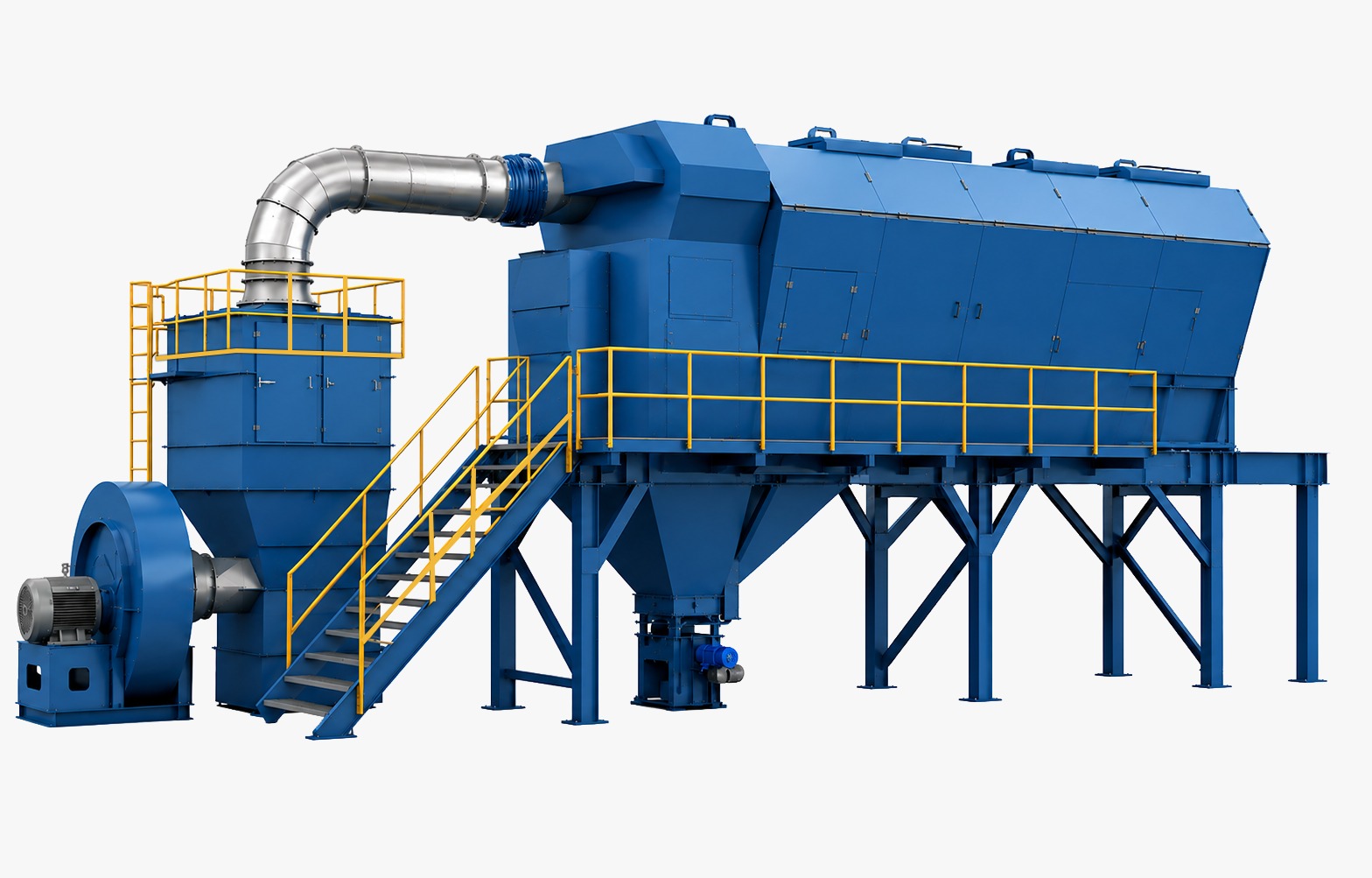
Air-Based Separators / Windshifters: Efficient Light & Heavy Fraction Separation
Air-based separators, commonly known as windshifters, are used in RDF and waste processing lines to effectively separate light combustible fractions from heavy inert materials. Designed for high-capacity operation and abrasive waste streams, these systems play a critical role in improving fuel quality and protecting downstream equipment.
Key Features
- Engineered to process abrasive and heavy materials such as glass, stones, inert fractions, and metal scrap without performance degradation.
- Capable of handling material sizes up to 600 mm, allowing direct integration after primary or secondary shredding.
- High-throughput design with capacities of up to 200 m³/hour, suitable for large-scale RDF and MSW processing plants.
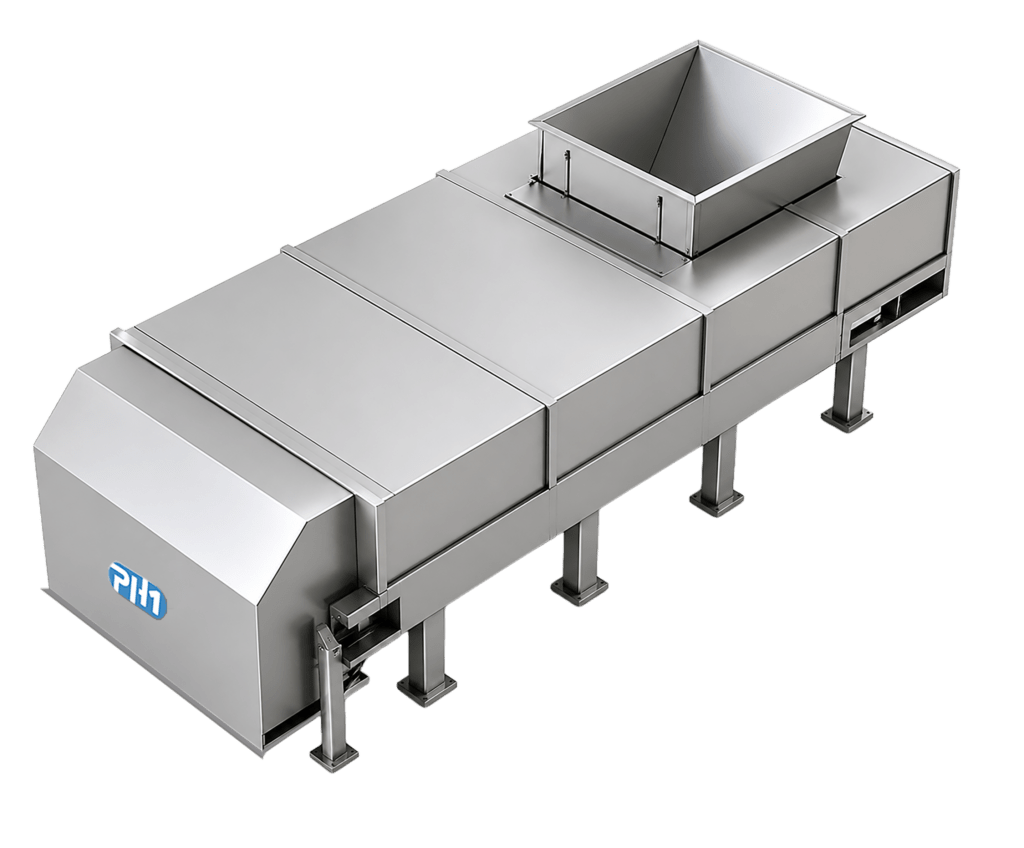
- Advanced 3-in-1 separation technology enabling simultaneous separation of light, medium, and heavy fractions at high capacities.
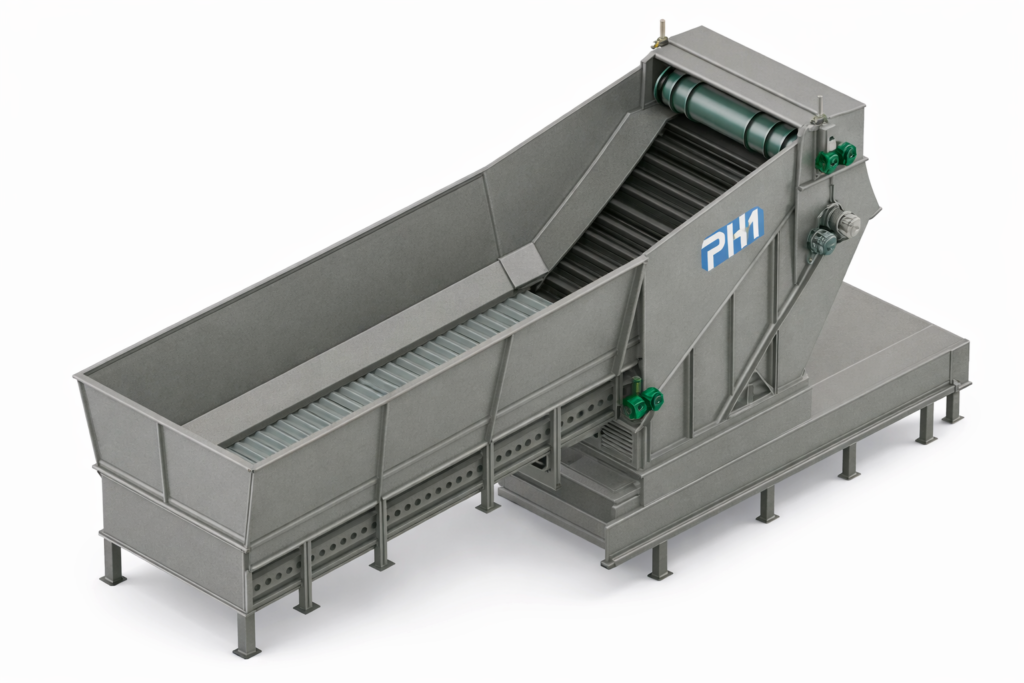
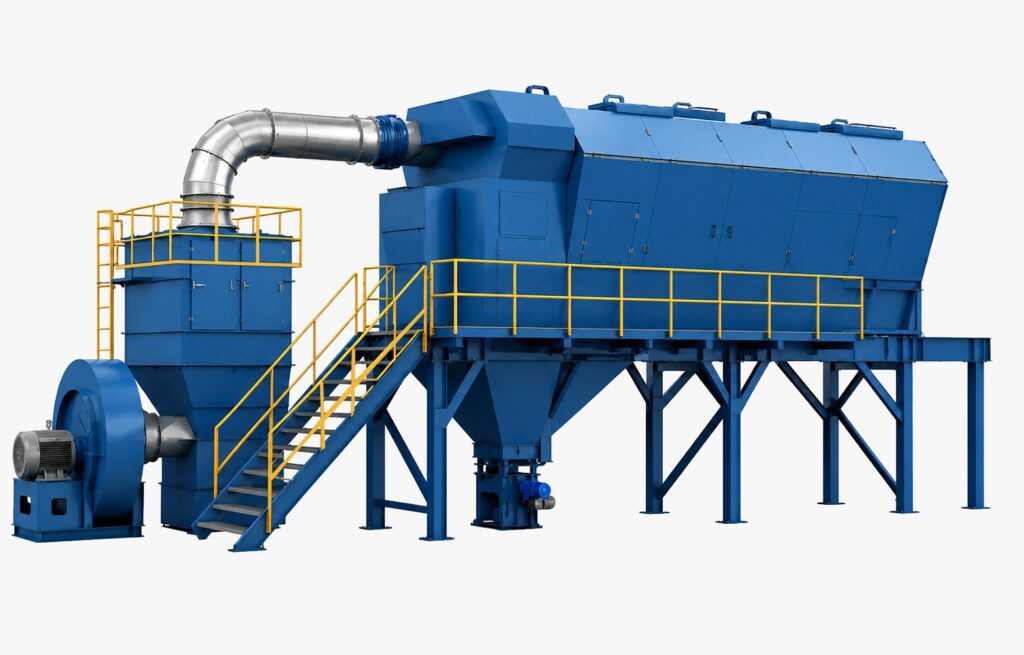
- Enclosed system design with negative pressure technology ensures dust-free and environmentally compliant operation.
Benefits
- Significant improvement in RDF and SRF quality by removing inert and non-combustible contaminants.
- Reduced wear and damage to downstream shredders, conveyors, and fuel handling systems.
- Low maintenance design with minimal wear parts, resulting in reduced downtime and lower operating costs.
- Cleaner plant environment and improved worker safety due to controlled dust extraction and containment.