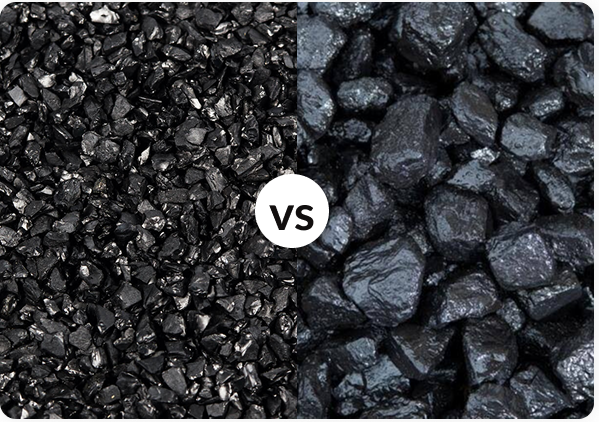
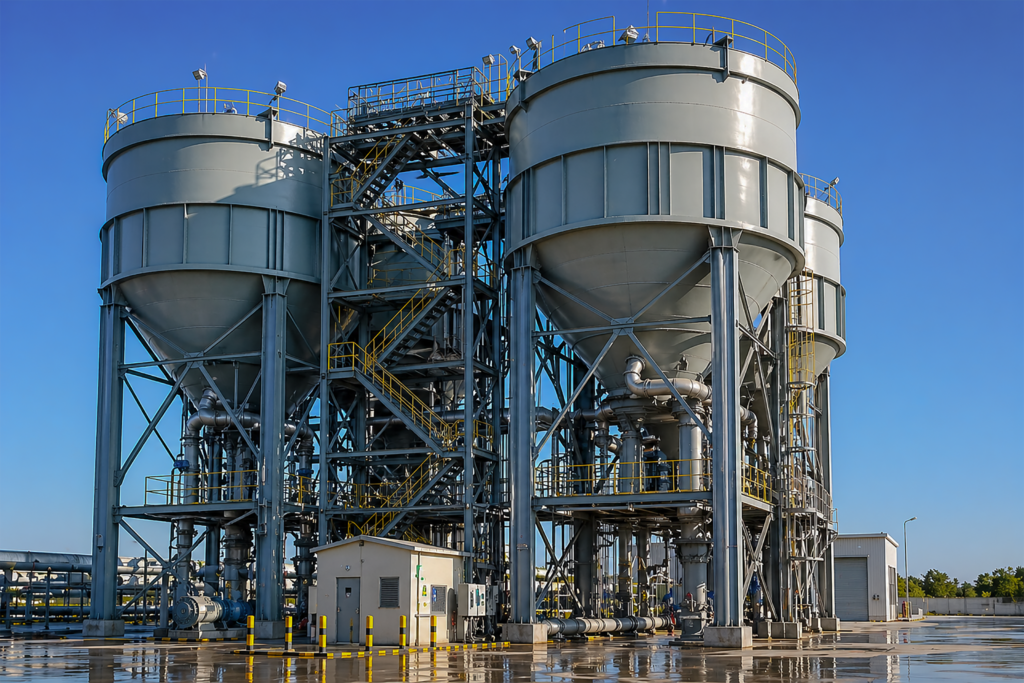
Carbon Black is a fine, powder-like material produced from the incomplete combustion or thermal decomposition of heavy petroleum products such as coal tar, FCC tar, and ethylene cracking tar.
It is widely used in rubber, plastics, inks, paints, and chemical applications, and in cement plants it is increasingly used as an alternative fuel due to its high calorific value and excellent combustion characteristics.
Benefits of Using Carbon Black as AFR (vs. Coal)
Higher TSR Potential: Carbon black offers a higher calorific value compared to traditional coal, improving the Thermal Substitution Rate when used as alternate fuel.
Improved Kiln Efficiency: Finer material and higher volatile content ensure quick ignition and stable combustion.
Reduced Fuel Cost: As a recovered waste material, carbon black provides a lower-cost energy source compared to imported coal.
Lower Emissions Footprint: Helps reduce overall CO₂ emissions by replacing fossil fuels with waste-derived fuel.
Consistent Fuel Quality: Processed carbon black has predictable heating value, improving AFR control and kiln stability.
Unloading and Feeding Systems
Jumbo Bag Unloading
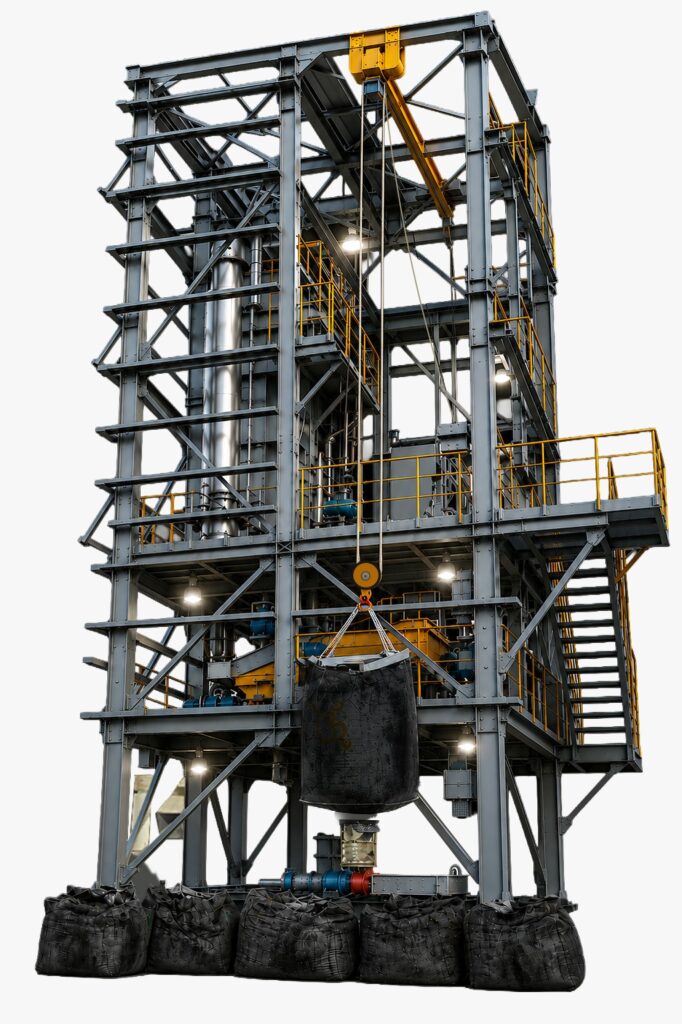
Jumbo Bag Unloading systems are designed to handle large quantities of carbon black that come in bulk bags….
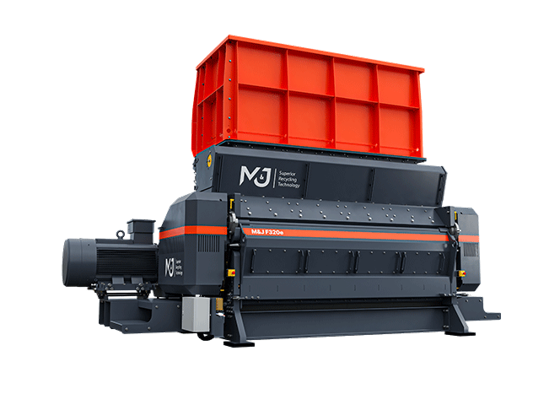
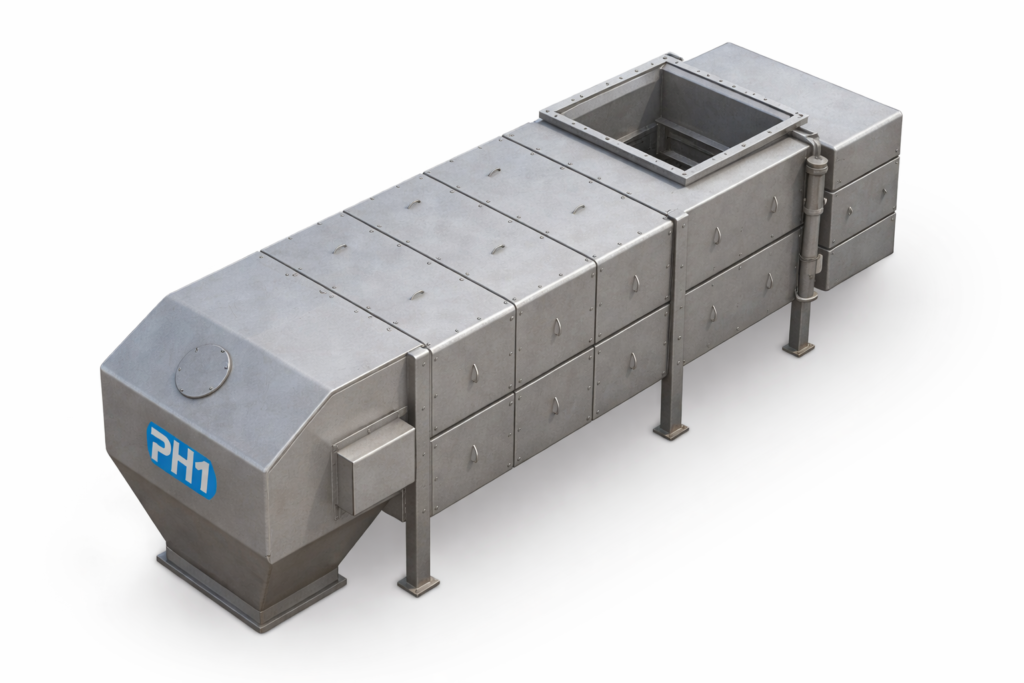
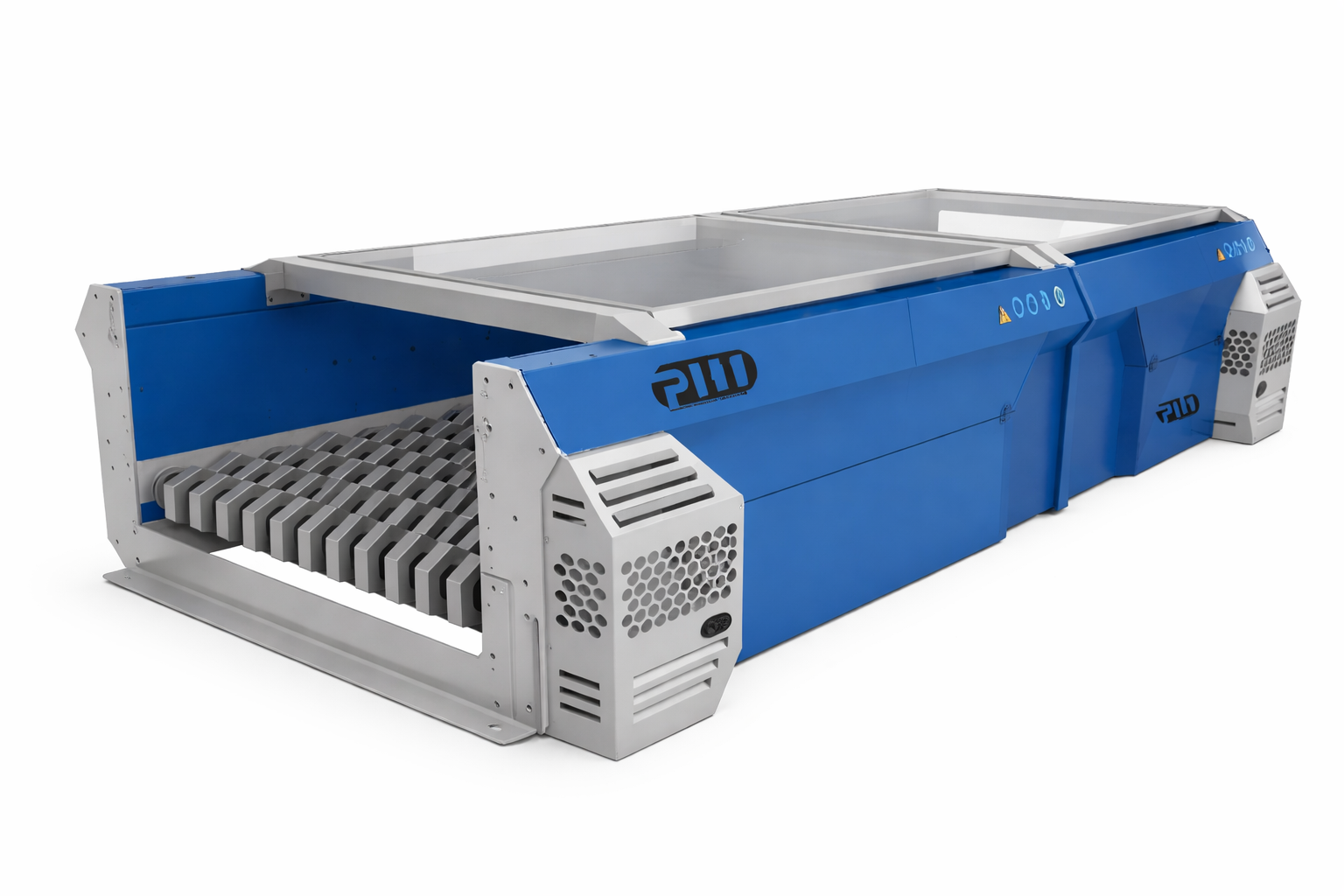
Secondary shredders, also known as fine shredders, operate after primary shredding and material separation to deliver controlled, uniform particle sizes for RDF, SRF, recycling, and waste-to-energy applications. They refine pre-shredded material into consistent fuel fractions, improving calorific value, handling efficiency, and downstream process stability.
Key Features
Precision shredding for premium RDF/SRF.
Energy-efficient with low operating costs.
High throughput and consistent output.
Quick maintenance and easy servicing.
Reliable feeding for uninterrupted operation.
Uniform particle size for better fuel quality.
Heavy-duty design for maximum uptime.
Engineered for continuous industrial performance.
Waste Types
Pre-shredded industrial waste
Municipal solid waste (MSW) fractions
Paper, cardboard, and pulp residues
Textile and fibre-rich wastes
Biomass, plastics, and mixed sorted feed streams
Specifications
Capacity
Up to 28t/h
◫
Size
Down to 15-50 mm
#
No of knives
84, 168, 336
Power range
2×160 kW
Primary Shredder · PH1
Primary Shredder
Industrial Waste & Bulk Reduction
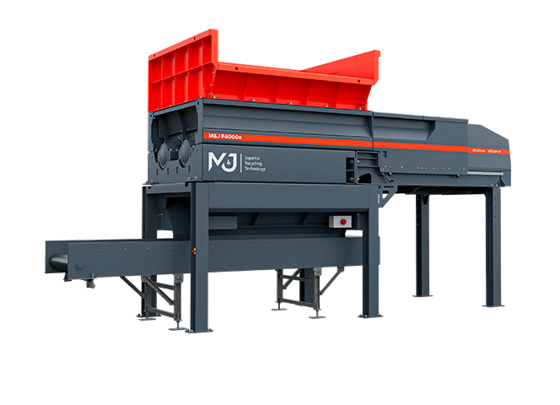
Primary shredders (pre-shredders) form the first stage of industrial waste processing, designed to handle large, bulky, and difficult materials. Engineered for high-torque, heavy-duty operation, they ensure efficient size reduction and reliable feed preparation for downstream sorting, RDF production, and waste-to-energy processes.
Key Features
Handles diverse waste streams with ease.
High-throughput, precision shredding.
Energy-efficient operation with low cost per tonne.
Flexible configurations for every application.
Anti-jam technology for uninterrupted processing.
Heavy-duty, low-maintenance design.
Fast servicing with modular components.
Reliable performance and maximum uptime.
Waste Types
Mixed Municipal Solid Waste (MSW)
Industrial & Commercial Waste
Bulky and Oversized Items
Construction & Demolition Waste
Textiles, Cardboard & Paper Bales
Plastics & Composite Materials
Wood & Green Waste
Specifications
Capacity
Up to 125t/h
◫
Size
Down to 100mm
#
No of Knives
6, 8, 9, 10, 12
Power
2×110 / 2×160 kW
Ship Loading System · PH1
Ship Loading & Unloading Systems
High-Capacity Bulk Loading & Unloading for Efficient Port Operations
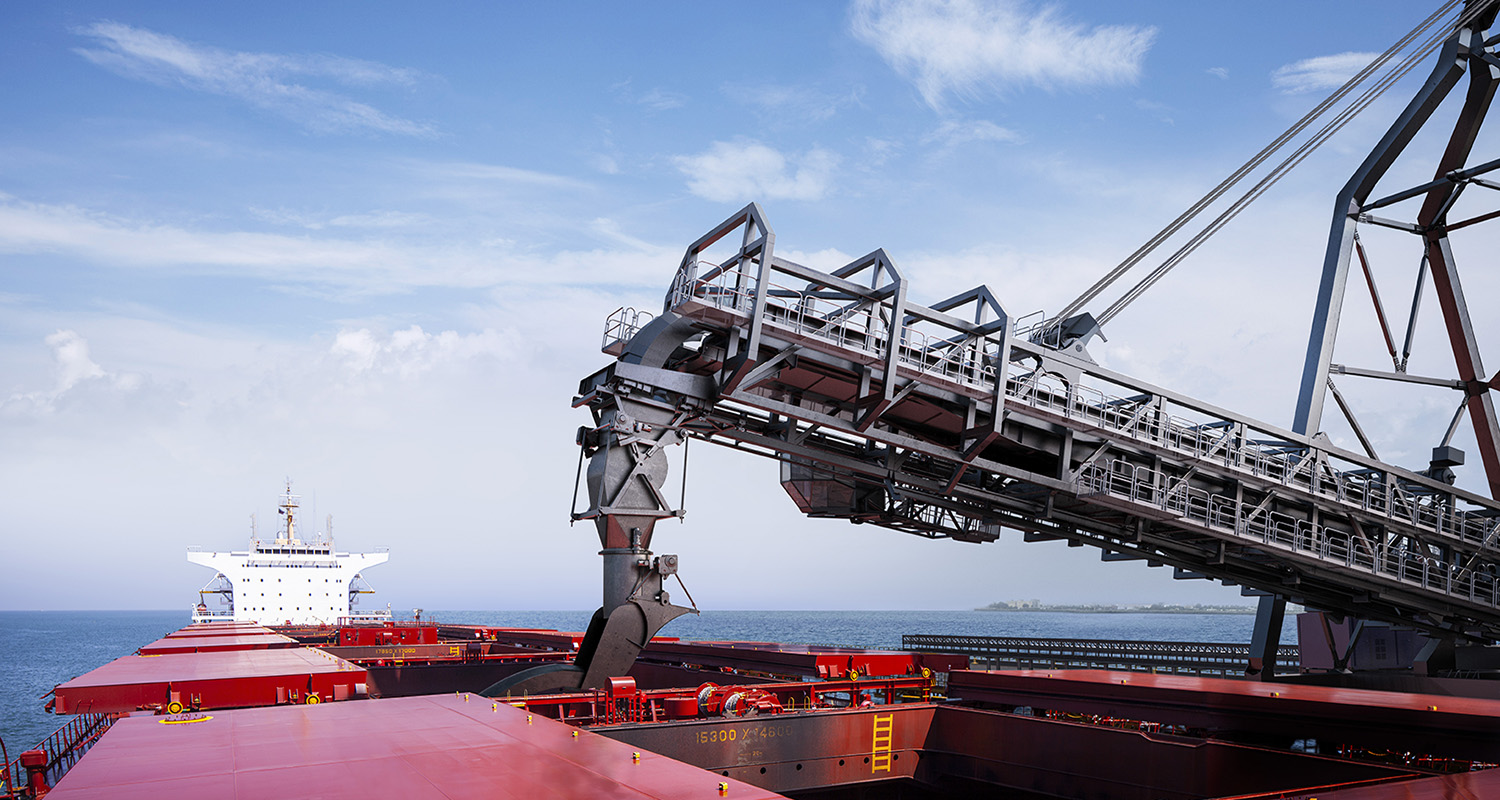
PH1 Ship Loading & Unloading Systems are engineered for the efficient transfer of bulk materials between marine vessels and port, storage, and processing facilities. Designed for high-capacity and continuous operation, the systems enable rapid vessel loading and unloading with controlled material flow, reduced dust emissions, and seamless integration with conveyors, silos, transfer towers, and other terminal infrastructure. Each system is custom-engineered to suit vessel configuration, material characteristics, berth layout, and required throughput.
Technical Specifications
Designed for continuous, high-capacity vessel loading and unloading
Capacities from 200 TPH to over 2,000 TPH
Available in mechanical or pneumatic unloading configurations
Compatible with belt conveyors, silos, transfer towers, stackers, and storage systems
Telescopic loading/unloading chutes with integrated dust suppression (optional)
Integrated dust extraction and environmental control systems
Automated material flow and loading/unloading control
Corrosion-resistant construction for demanding marine environments
Suitable for fixed, mobile, or customized loading arrangements
Custom-engineered to suit vessel size, berth configuration, material, and terminal layout
Benefits
Faster Vessel Turnaround — High-capacity transfer minimizes loading and unloading time and reduces vessel waiting periods.
High-Throughput Material Handling — Enables continuous and reliable bulk material transfer at capacities exceeding 2,000 TPH.
Reduced Dust & Spillage — Controlled transfer points and integrated environmental systems minimize material loss and airborne dust.
Lower Operating Costs — Efficient material flow helps reduce handling, downtime, and potential demurrage costs.
Seamless Terminal Integration — Designed to connect efficiently with existing conveying, storage, and processing infrastructure.
Reliable Marine Operation — Robust, corrosion-resistant construction ensures dependable performance in demanding coastal environments.
Flexible Engineering — Configured around vessel dimensions, material properties, berth constraints, and required throughput.
Typical Applications
Port & Bulk Cargo Terminals
Cement & Clinker Export / Import Facilities
Coal, Limestone & Gypsum Handling
Mining & Mineral Export Operations
Fertilizer & Grain Terminals
Power Plant Bulk Material Receiving Systems
Industrial Bulk Material Shipping Facilities
Additive Blending & Mixing System · PH1
Additive Blending & Mixing System
Precision Blending for Consistent Product Quality
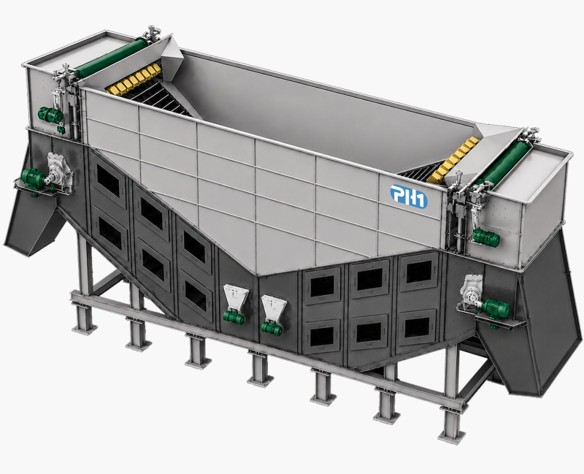
PH1 Additive Blending & Mixing Systems are engineered to accurately proportion and homogenize multiple bulk materials, ensuring a consistent and uniform final product. Designed for continuous industrial operation, the system enhances process efficiency, improves product quality, and enables precise control over additive dosing across a wide range of material processing applications.
Technical Specifications
Accurate multi-material dosing and blending
Continuous or batch mixing configurations
High-precision weigh feeders and dosing equipment
PLC-based automation with recipe management
Uniform mixing for powders, granules, and fine bulk materials
Modular system design for customized plant layouts
Integrated material conveying, storage, and discharge systems
Seamless integration with existing plant control systems
Benefits
Ensures consistent product composition and quality
Precise additive dosing with minimal material variation
Improves process efficiency and operational reliability
Reduces material wastage and product inconsistencies
Flexible configuration for different process requirements
Low maintenance with fully automated operation
Typical Applications
Cement Additive Blending
Mineral & Industrial Powder Mixing
Alternative Fuel & Biomass Blending
Dry Bulk Material Homogenization
Chemical & Process Industries
Continuous Manufacturing & Material Processing Plants
Twin DoseMaster™ Feeder · PH1
Twin DoseMaster™ Feeder
Precision Extraction & Dosing for Advanced AFR Feeding
PH1’s Twin DoseMaster™ Feeder is a compact extraction and dosing system designed to deliver accurate and stable alternative fuel feeding directly at the point of injection. Featuring dual independent feed channels, the system provides enhanced process flexibility, precise fuel metering, and reliable handling of a wide range of alternative fuels.
Technical Specifications
Twin extraction and dosing arrangement
Independent feed control for each channel
Accurate and stable AFR metering
Integrated extraction and dosing in a single unit
Compact design for installation close to the injection point
Enhanced process flexibility for multiple fuel streams
Designed for reliable handling of RDF, biomass, and difficult alternative fuels
Advanced automation and process control capabilities
Benefits
Precise and consistent alternative fuel dosing
Improved combustion stability and process control
Greater operational flexibility through independent feed channels
Reduced footprint and simplified installation
Reliable performance with varying fuel characteristics
Enhanced AFR substitution rates and fuel utilization
Typical Applications
Calciner AFR Feeding Systems
Multi-Point Fuel Injection Installations
RDF, Biomass & Alternative Fuel Dosing
Cement Kiln Co-processing
High-Precision AFR Feeding Applications
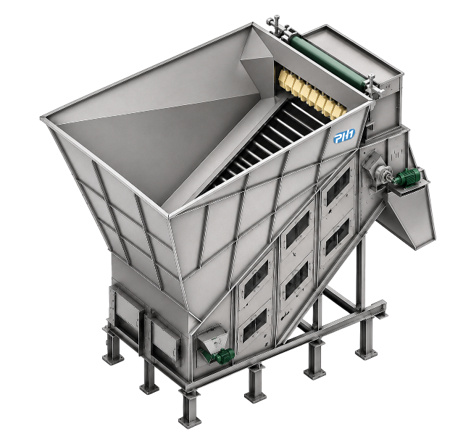
DoseMaster™ Extractor · Controlled Discharge System
Dose Master™ Extractor
Heavy-Duty Extraction for Reliable Material Flow
PH1’s DoseMaster™ Extractor is a heavy-duty extraction system engineered for the controlled discharge of alternative fuels and bulk materials from storage hoppers and bunkers. Designed to handle challenging materials with varying flow characteristics, the system ensures consistent material withdrawal, stable process feeding, and reliable operation in demanding industrial environments.
Technical Specifications
Hopper capacities up to 30 m³
Extraction capacities up to 400 m³/hr
Uniform material discharge through regulating drum system
Synchronized operation with weigh feeders for precise dosing
Compatible with wheel loaders, grab cranes, and tipper truck feeding
Heavy-duty construction for abrasive and difficult materials
PLC-based automation with advanced process monitoring
Integrated sensors for safe and reliable operation
Benefits
Consistent and controlled material extraction
Improved feeding accuracy and process stability
Reduced material bridging and flow interruptions
Enhanced utilization of alternative fuels
Reliable performance under varying material conditions
Lower maintenance requirements and increased operational uptime
Typical Applications
RDF & Biomass Extraction Systems
Alternative Fuel Storage Bunkers
Cement Kiln Co-processing Facilities
Continuous AFR Feeding Systems
Waste-to-Energy Plants
Bulk Material Reclaim & Handling Systems
Ship Loading & Unloading Systems
Ship Loading & Unloading Systems
High-Capacity Marine Bulk Loading & Unloading for Port Operations
PH1 Ship Loading & Unloading Systems are engineered for the efficient transfer of bulk materials between marine vessels and port, storage, and processing facilities. Designed for high-capacity and continuous operation, the systems enable rapid vessel loading and unloading with controlled material flow, reduced dust emissions, and seamless integration with conveyors, silos, transfer towers, and other terminal infrastructure. Each system is custom-engineered to suit vessel configuration, material characteristics, berth layout, and required throughput.
Technical Specifications
Designed for continuous, high-capacity vessel loading and unloading
Capacities from 200 TPH to over 2,000 TPH
Available in mechanical or pneumatic unloading configurations
Compatible with belt conveyors, silos, transfer towers, stackers, and storage systems
Telescopic loading/unloading chutes with integrated dust suppression (optional)
Integrated dust extraction and environmental control systems
Automated material flow and loading/unloading control
Corrosion-resistant construction for demanding marine environments
Suitable for fixed, mobile, or customized loading arrangements
Custom-engineered to suit vessel size, berth configuration, material, and terminal layout
Benefits
Faster vessel unloading and reduced turnaround time
Lower demurrage and operational costs
Minimal material spillage and dust emissions
High-capacity, continuous bulk material handling
Reliable performance in harsh coastal environments
Seamless integration with port and terminal logistics
Typical Applications
Port & Bulk Cargo Terminals
Cement & Clinker Imports
Coal, Limestone & Gypsum Handling
Mining & Mineral Export Facilities
Fertilizer & Grain Terminals
Power Plant Bulk Material Receiving Systems
Bulker Unloading · PH1
Bulker Unloading System
Efficient, Dust-Free Unloading for Bulk Powder Handling
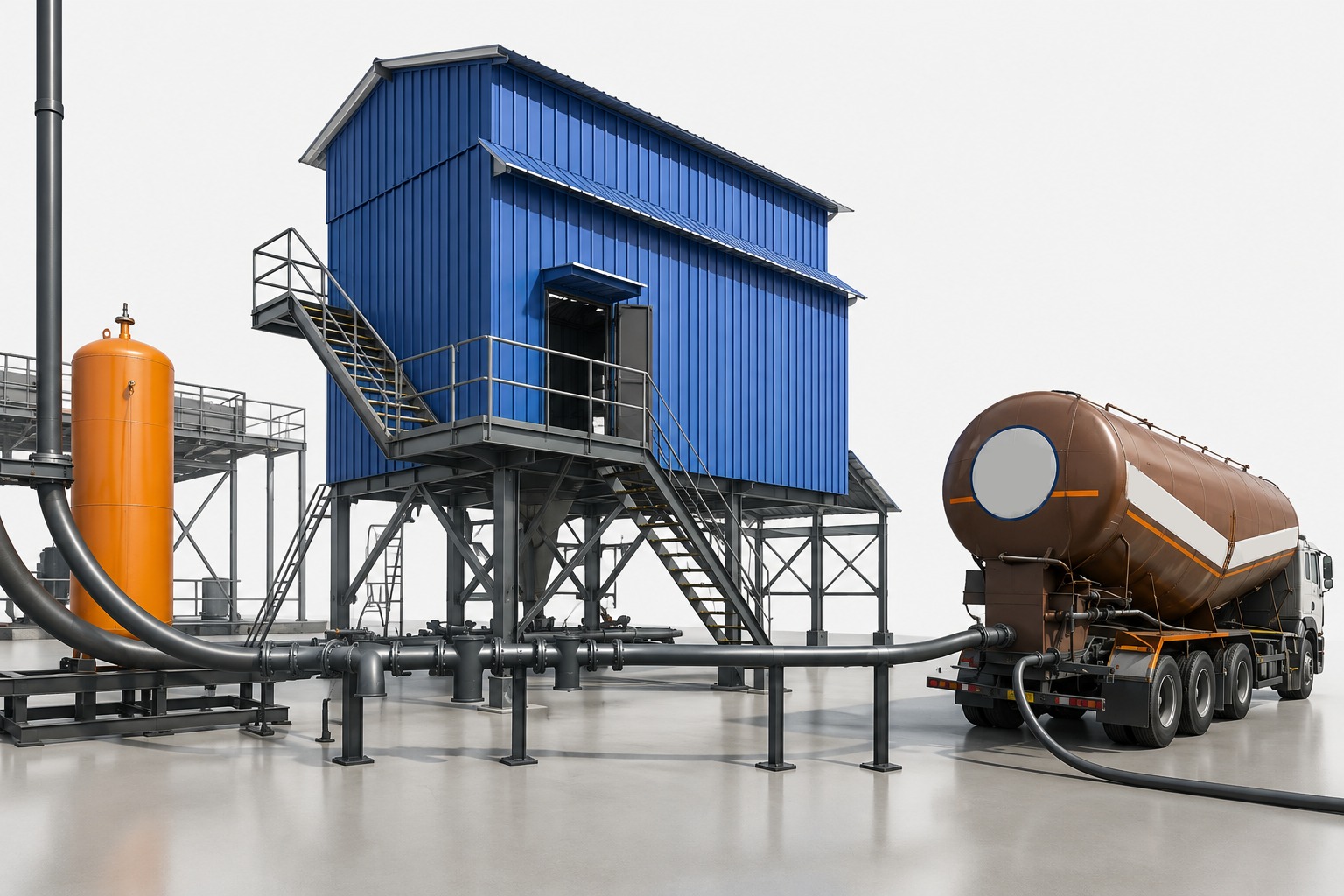
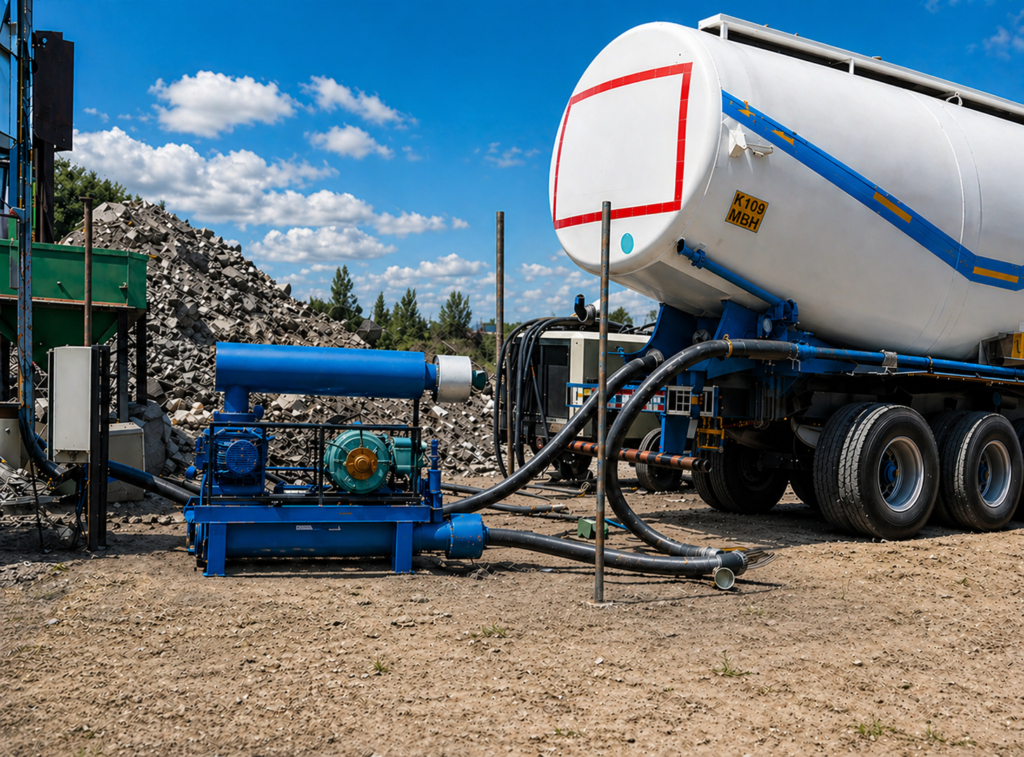
PH1 Bulker Unloading Systems are engineered for the safe and efficient transfer of bulk powders from road tankers and bulkers into storage silos or process bins. Designed for high unloading rates and clean operation, the system ensures reliable material transfer while minimizing dust emissions, product losses, and operator intervention.
Technical Specifications
Compatible with Pressure or Vacuum unloading systems
Unloading capacities up to 100 TPH
Fully enclosed, dust-free unloading arrangement
Integrated dedusting filters and pressure relief systems
Silo protection with non-return valves and level interlocks
Compact design for easy installation and retrofit projects
Suitable for a wide range of fine bulk powders
Continuous-duty operation with low maintenance requirements
Benefits
Fast and efficient bulker unloading
Dust-free operation with improved plant cleanliness
Protects silos against over-pressurization and overfilling
Reduced operator intervention and improved safety
Minimal product loss during unloading
Reliable, low-maintenance performance
Typical Applications
Cement & Supplementary Cementitious Materials
Fly Ash & Fine Mineral Powders
Lime & Alumina Handling
Chemical & Industrial Powder Transfer
Food & Feed Bulk Material Handling
Storage Silo Receiving Systems
BCFC Wagon Unloading · PH1
BCFC Wagon Loading & Unloading
High-Capacity Rail Unloading for Efficient Bulk Material Handling
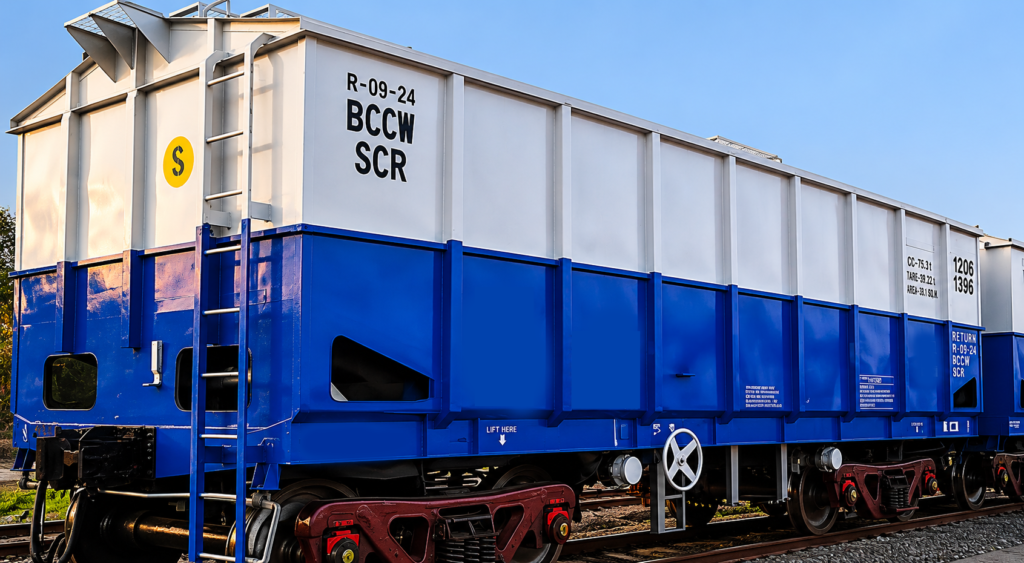
PH1 BCFC Wagon Loading & Unloading Systems are engineered for the rapid and efficient loading & unloading of bulk materials from bottom and side discharge railway wagons. Designed for high-capacity operations, the system ensures smooth material discharge, minimal spillage, and seamless integration with downstream conveying systems for continuous plant operation.
Technical Specifications
Designed for Bottom & Side Discharge Freight Containers (BCFC)
High unloading capacities up to 1,500 TPH
Heavy-duty receiving hoppers with wear-resistant liners
Gravity-assisted material discharge for efficient unloading
Integrated dust suppression and dedusting arrangements
Compatible with belt, apron, screw, and pneumatic conveying systems
Robust construction for abrasive and heavy bulk materials
Continuous-duty design for reliable industrial operation
Benefits
Rapid wagon unloading with reduced turnaround time
Minimized material spillage and product losses
Reduced manual intervention and improved operational safety
Cleaner unloading through integrated dust control
Reliable performance under continuous heavy-duty operation
Easy integration with existing bulk material handling systems
Typical Applications
Cement & Clinker Handling
Fly Ash & Mineral Powder Unloading
Coal & Petcoke Receiving Systems
Limestone & Gypsum Handling
Mining & Mineral Processing
Power Plants & Bulk Material Logistics
Tunnel Dedusting Systems · PH1
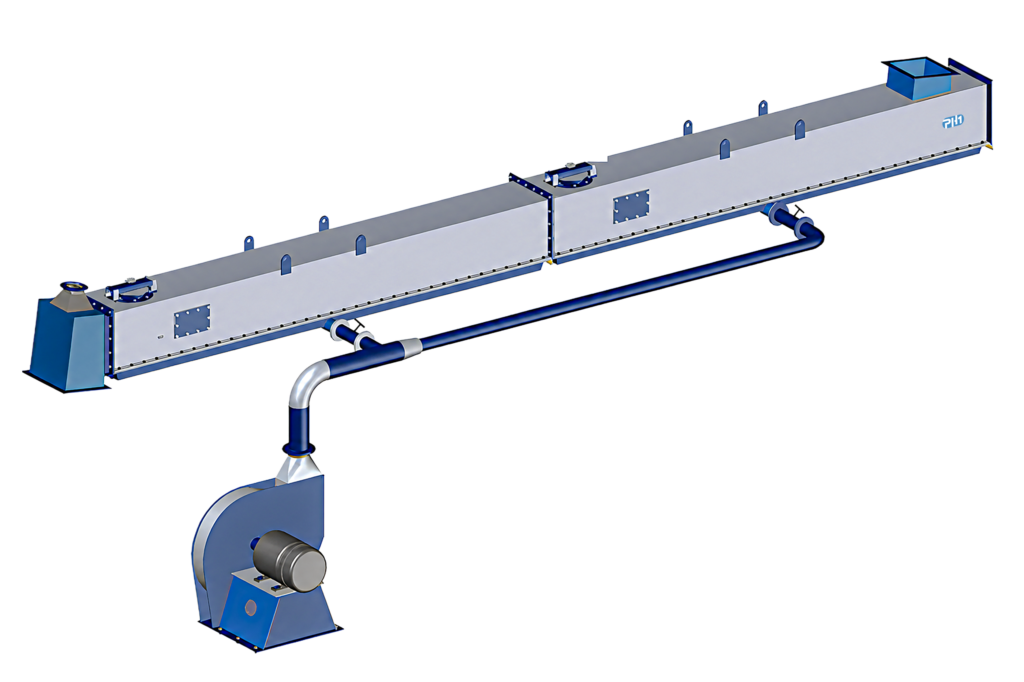
Tunnel Dedusting Systems
Efficient Dust Extraction for Enclosed Conveying Systems
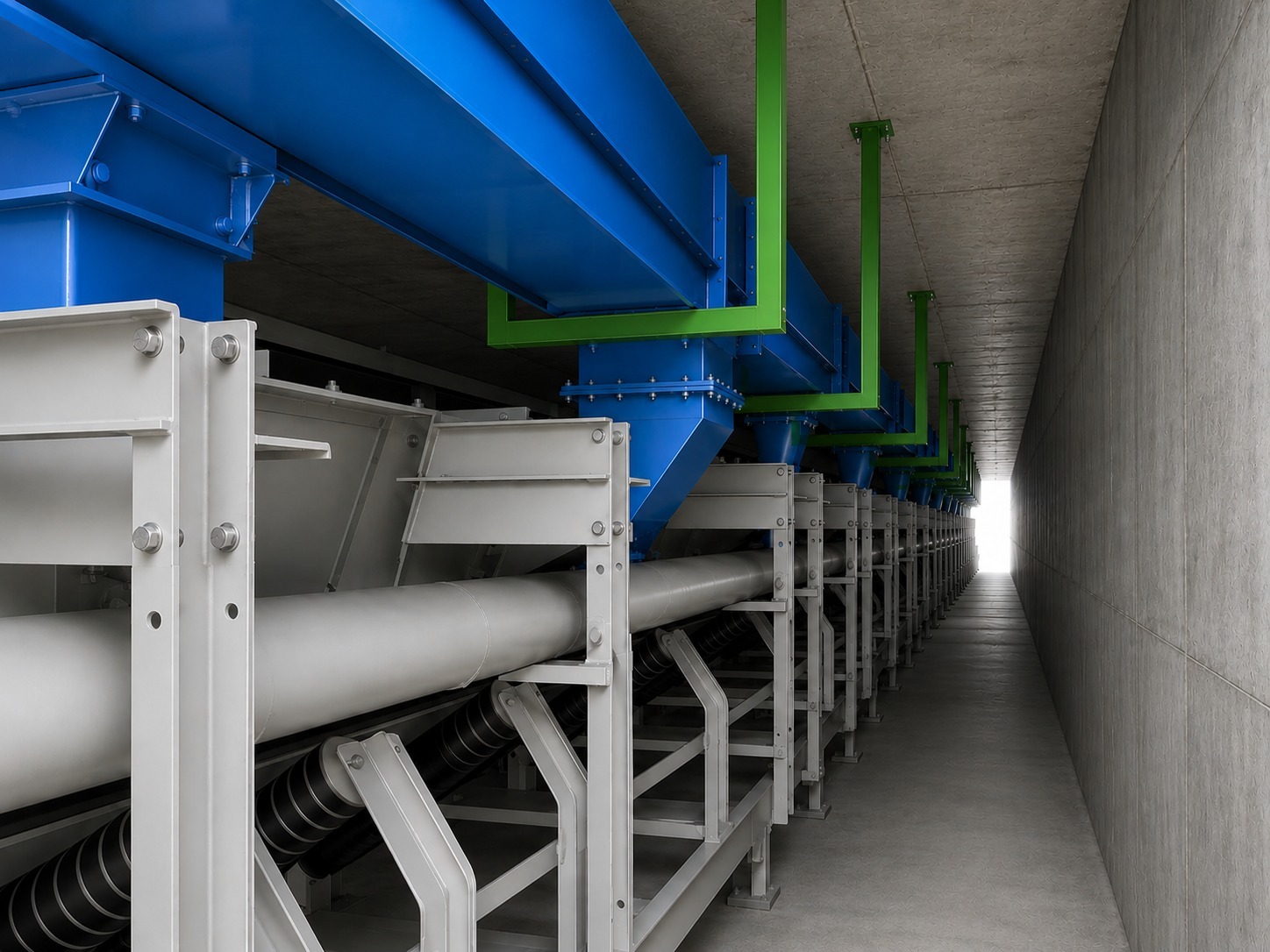
PH1 Tunnel Dedusting Systems are engineered to maintain clean, safe, and dust-free conditions within enclosed conveyor tunnels and material transport corridors. Designed for continuous industrial operation, these systems efficiently extract airborne dust while maintaining balanced airflow, improving workplace safety, and ensuring reliable operation of long-distance conveying systems.
Technical Specifications
High-efficiency tunnel dust extraction system
Optimized ventilation and airflow management
Controlled pressure balancing for enclosed tunnels
Designed for long-distance conveying installations
Continuous-duty operation in demanding environments
Low-maintenance, heavy-duty construction
Custom-engineered to suit plant layout and process requirements
Seamless integration with central dust collection systems
Benefits
Effective removal of suspended dust particles
Improved visibility and workplace safety
Enhanced air quality within enclosed conveyor tunnels
Reduced dust accumulation on equipment and structures
Reliable, energy-efficient operation with minimal maintenance
Supports environmental compliance and cleaner plant operations
Typical Applications
Underground Conveyor Tunnels
Bulk Material Transport Corridors
Cement Plants
Mining & Mineral Processing Facilities
Industrial Conveying Systems
Enclosed Material Handling Installations
Bag Filters · PH1
Bag Filters
High-Performance Filtration for Cleaner Industrial Operations
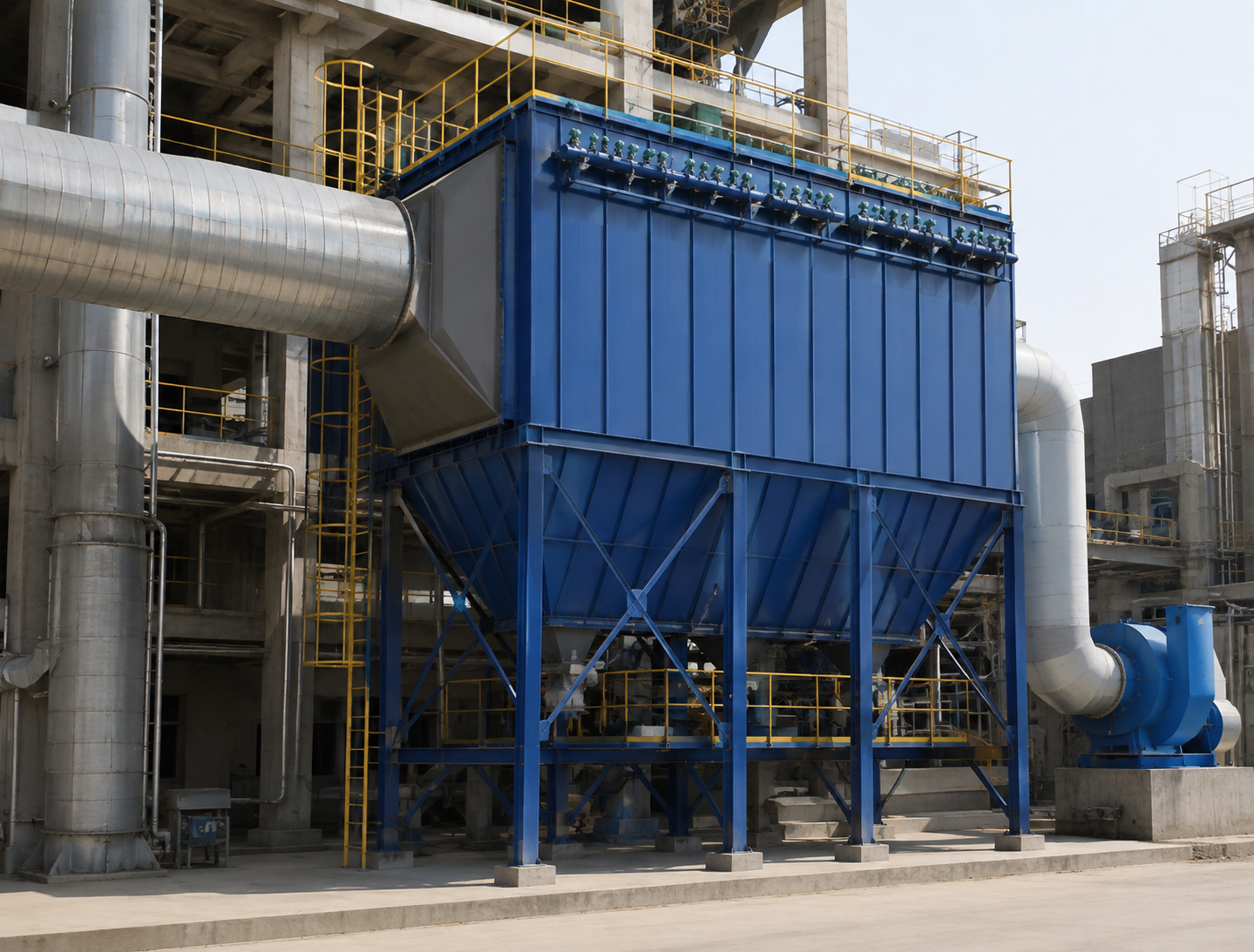
PH1 Bag Filters are engineered to provide efficient particulate filtration across a wide range of industrial processes. Designed for continuous operation and high dust collection efficiency, they ensure clean air discharge, improved workplace safety, and compliance with stringent environmental standards while maintaining reliable process performance.
Technical Specifications
High-efficiency particulate filtration
Compact and modular system design
Optimized airflow for superior dust collection performance
Suitable for varying dust loads and process conditions
Easy-access filter bags for simplified maintenance
Low pressure drop for energy-efficient operation
Robust construction for continuous industrial duty
Custom-engineered to meet specific process requirements
Benefits
High dust collection efficiency
Improved air quality and environmental compliance
Reduced maintenance and operational downtime
Energy-efficient operation with optimized airflow
Reliable performance across varying process conditions
Long service life with easy maintenance
Typical Applications
Transfer Points & Conveyors
Crushers & Screens
Silos & Hoppers
Loading & Unloading Stations
Process Dust Extraction Systems
Cement & Bulk Material Handling Plants
Reverse Air Bag House · PH1
Reverse Air Bag House
High-Efficiency Dust Collection for Continuous Industrial Operation
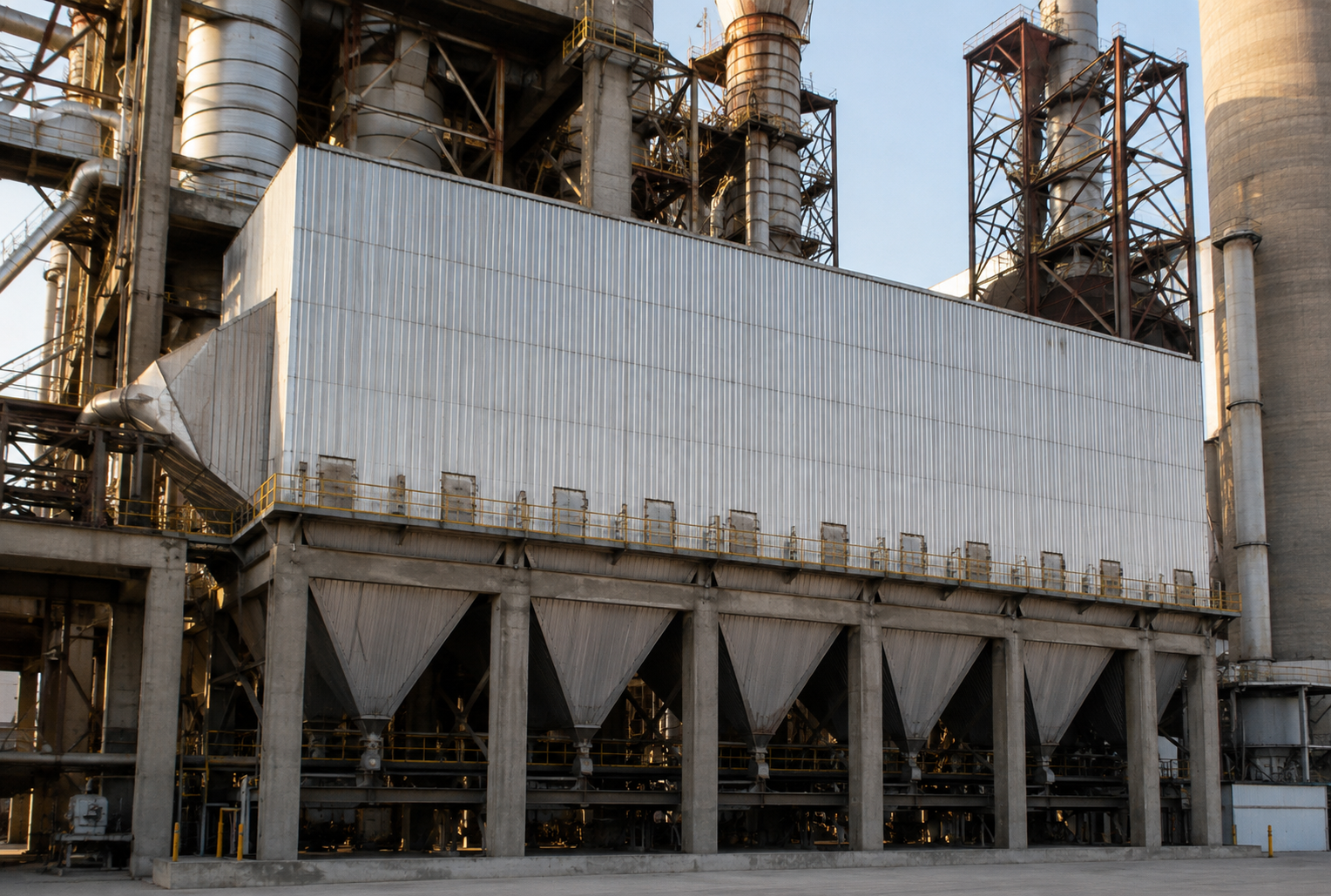
PH1 Reverse Air Bag Houses are engineered to deliver efficient dust collection in high-volume industrial applications. Utilizing a reverse airflow cleaning mechanism, the system continuously removes accumulated dust from filter bags, ensuring consistent filtration performance, stable airflow, and reliable operation under demanding process conditions.
Technical Specifications
Reverse airflow bag cleaning technology
High-efficiency particulate filtration
Optimized airflow distribution for uniform performance
Durable filter bag assemblies for extended service life
Low pressure drop for energy-efficient operation
Continuous-duty design for demanding industrial environments
Robust construction for long-term reliability
Custom-engineered to suit plant-specific process requirements
Benefits
High dust collection efficiency
Stable airflow with consistent filtration performance
Reduced maintenance and operational downtime
Improved plant cleanliness and air quality
Energy-efficient operation with lower pressure losses
Long service life in demanding industrial applications
Typical Applications
Cement Plants
Clinker Coolers
Grinding Units
Bulk Material Handling Systems
Industrial Process Plants
Grinding Aid Injection System · PH1
Grinding Aid Injection System
Precision Liquid Dosing for Enhanced Grinding Performance
PH1 Grinding Aid Injection Systems are engineered to deliver accurate and consistent dosing of liquid grinding aids into cement grinding circuits. Designed to improve mill efficiency, reduce energy consumption, and enhance cement quality, the system ensures reliable additive injection with seamless integration into existing plant operations.
Technical Specifications
High-accuracy metering pumps for precise liquid dosing
Storage tanks with optional level indicators, heaters, and insulation
Flow meters and control valves for accurate flow regulation
Corrosion-resistant injection lances and piping
Manual or fully automatic operation
PLC/DCS-ready automation with mill integration
Skid-mounted, compact system design
Suitable for Ball Mills, VRMs, and Roller Press circuits
Benefits
Improves grinding efficiency and mill throughput
Reduces specific power consumption
Enhances cement quality and particle size distribution
Minimizes grinding aid consumption and chemical wastage
Reliable, continuous operation with low maintenance
Easily integrated into new and existing grinding systems
Typical Applications
Cement Grinding Units
Integrated Cement Plants
Ball Mill Grinding Circuits
Vertical Roller Mills (VRMs)
Roller Press Grinding Systems
Mineral Grinding & Processing Plants
Guillotine Damper · PH1
Guillotine Damper
Heavy-Duty Isolation for Critical Process Applications
PH1 Guillotine Dampers are engineered to provide positive isolation of air and gas streams in large process ducts carrying dust-laden or high-temperature gases. Designed for maximum sealing performance and operational safety, they offer reliable shutoff for critical process isolation and emergency applications in demanding industrial environments.
Technical Specifications
Shutoff efficiency up to 99%
Operating temperatures up to 540°C (1000°F)
Available in Round, Square, and Rectangular configurations
Manufactured in Stainless Steel, Painted Carbon Steel, or special alloys
Compression seal or metal seat sealing options
Flexible metallic seals with optional seal air for near 100% sealing
Available with Manual, Electric, or Pneumatic actuation
Pneumatic versions available with spring return and fail-safe operation
Designed for Open/Close positive isolation
Benefits
Reliable positive isolation for critical process safety
Excellent sealing performance with minimal gas leakage
Suitable for high-temperature and dust-laden gas applications
Rugged construction for long service life in harsh environments
Low maintenance with dependable operation
Ideal for emergency shutdown and maintenance isolation
Typical Applications
Baghouse Inlet & Outlet Isolation
Kiln & Clinker Cooler Gas Ducts
High-Dust Process Gas Lines
Emergency Shutdown Systems
Cement Plant Process Ducting
Industrial Ventilation & Exhaust Systems
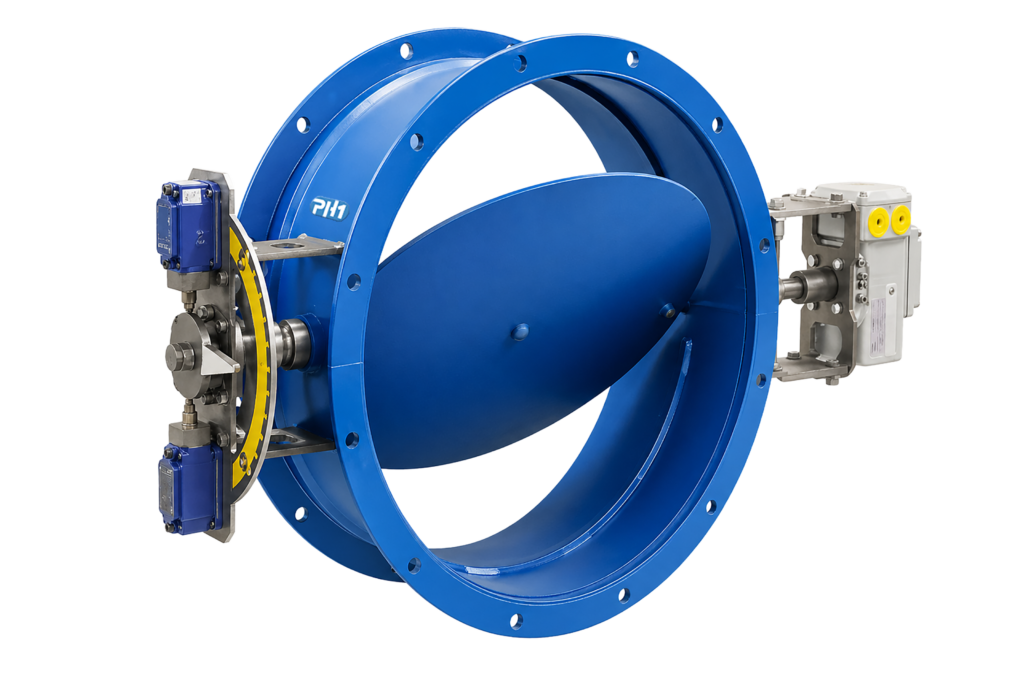
Butterfly Damper · PH1
Butterfly Damper
Compact Isolation & Fast Airflow Control
PH1 Butterfly Dampers are engineered for quick and reliable isolation of air and gas streams in industrial process systems. Featuring a compact rotating disc design, they provide rapid operation, low pressure loss, and dependable performance in high-temperature and medium-pressure applications.
Technical Specifications
Rotating disc design for rapid opening and closing
Compact construction with minimal pressure drop
Suitable for high-temperature air and gas applications
Available with Manual, Pneumatic, or Electric actuation
Designed for Round Duct installations
Heavy-duty disc and shaft construction for extended service life
Suitable for On/Off isolation and airflow control
Engineered for continuous industrial operation
Benefits
Fast and reliable air and gas isolation
Low pressure loss for improved system efficiency
Compact design requiring minimal installation space
Durable construction with low maintenance requirements
Reliable performance in demanding process conditions
Easy integration into existing ventilation and process ducting systems
Typical Applications
Kiln Exhaust & Preheater Ducts
Furnace & Boiler Air Lines
Process Ventilation Systems
Air & Gas Isolation Applications
Industrial Process Ducting
Cement & Thermal Processing Plants
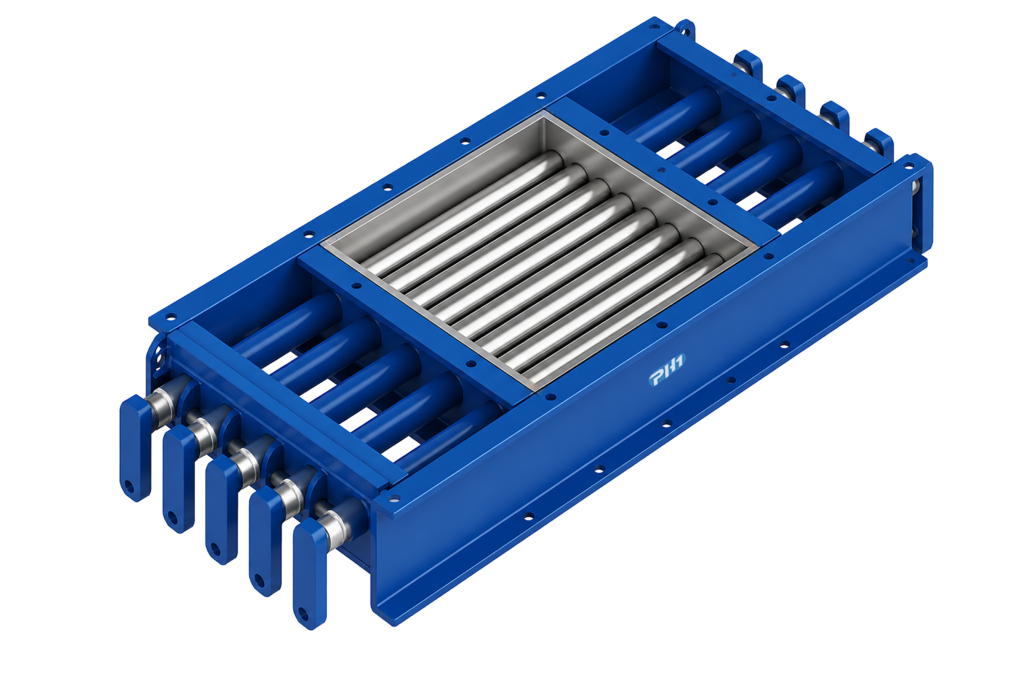
Multilouver Damper · PH1
Multilouver Damper
Precision Airflow Control for Large Process Ducts
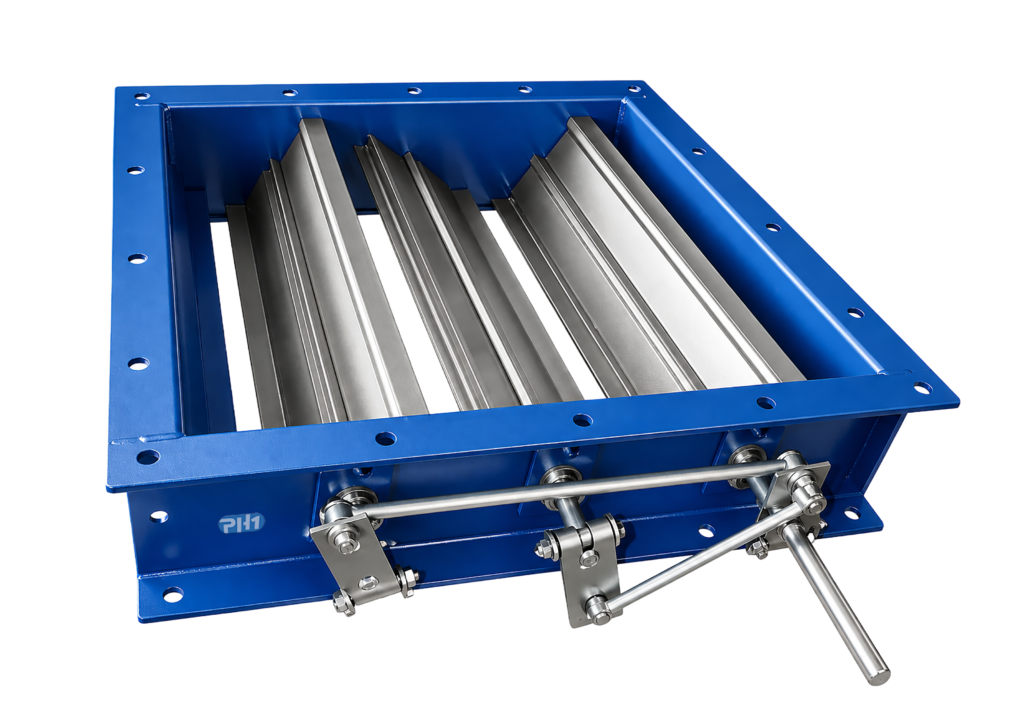
PH1 Multilouver Dampers are engineered to provide precise airflow regulation and reliable isolation in large ventilation and process air handling systems. Featuring multiple adjustable louvers and high sealing efficiency, they ensure uniform air distribution, optimized process control, and dependable performance in demanding industrial environments.
Technical Specifications
Multiple adjustable louvers for precise airflow modulation
Available in Round or Rectangular configurations
Standard sizes from 300 mm to 3000 mm (larger sizes available on request)
Manufactured in Carbon Steel, Stainless Steel, or special high-temperature materials
Suitable for On/Off isolation and Modulating control
Available with Pneumatic or Electric actuators
Flexible metallic seals for enhanced sealing performance
Optional seal air arrangement for near 100% sealing efficiency
Benefits
Precise and uniform airflow regulation
Excellent sealing performance with minimal air leakage
Reliable operation in high-temperature process environments
Improved process efficiency and ventilation control
Low maintenance with robust industrial construction
Easily integrates into new and existing ducting systems
Typical Applications
Cement Plant Ventilation Systems
Dust Extraction & Baghouse Inlet/Outlet Control
Cooling Towers & Large HVAC Ducts
Process Air Balancing in Heavy Industries
Industrial Exhaust & Ventilation Systems
Rod Gates · PH1
Rod Gates
Controlled Material Restriction for Reliable Process Protection
PH1 Rod Gates are engineered to regulate material size before it enters downstream equipment, ensuring controlled feeding and protecting critical process machinery from oversized materials. With a simple yet robust mechanical design, they provide a dependable solution for heavy-duty bulk material handling applications.
Technical Specifications
Effective material size restriction for controlled downstream feeding
Available in Single-row or Double-row rod configurations
Rugged fabricated construction for heavy-duty applications
Easy rod handling and maintenance
Manufactured in Mild Steel or Stainless Steel
Standard sizes from 200 mm to 2000 mm
Larger sizes available on request
Designed for continuous industrial operation
Benefits
Prevents oversized material from entering downstream equipment
Protects crushers, mills, and conveying systems from damage
Ensures consistent and controlled material flow
Simple, robust design with minimal maintenance
Long service life in demanding industrial environments
Easy integration into existing material handling systems
Typical Applications
Limestone Handling Systems
Raw Mill Feeding Systems
Clinker Discharge & Protection Points
Bulk Material Screening & Restriction Zones
Cement & Mineral Processing Plants
Heavy-Duty Bulk Material Handling Systems
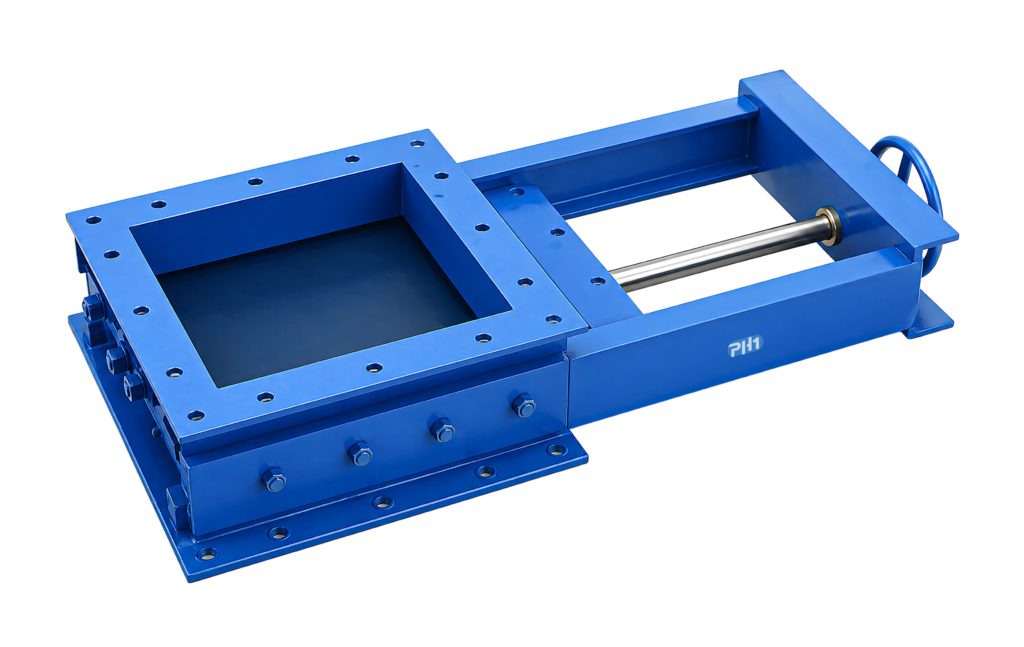
Slide Gates · PH1
Slide Gates
Positive Isolation for Reliable Material Flow Control
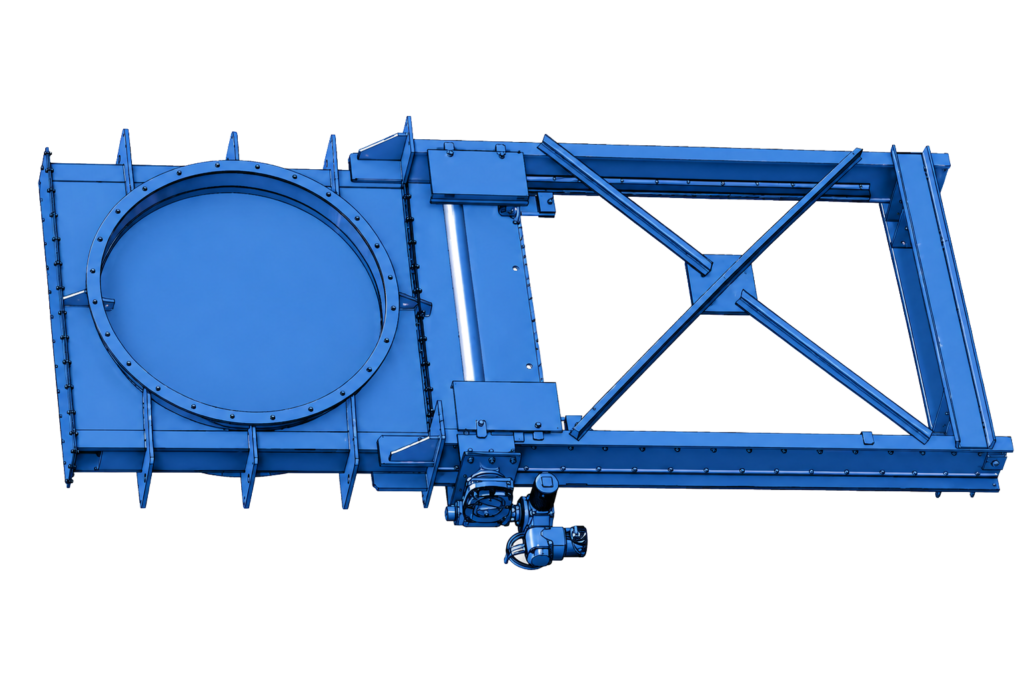
PH1 Slide Gates are engineered to provide positive shut-off and controlled flow regulation for powders, pellets, and granular materials. Designed with a dust-tight construction and 100% sealing efficiency, they ensure reliable material isolation, safe plant operation, and long-term performance across a wide range of industrial applications.
Technical Specifications
100% sealing efficiency for leak-free material isolation
Dust-tight construction for clean and safe operation
Smooth sliding mechanism for reliable performance
Available in Manual, Pneumatic, and Motorized configurations
Suitable for isolation as well as controlled flow regulation
Designed for continuous industrial duty
Manufactured in Carbon Steel, Stainless Steel, or Special Materials
Standard sizes from 150 mm to 600 mm
Available in Square or Rectangular configurations
Custom sizes available to suit specific plant requirements
Benefits
Complete material isolation with zero leakage
Improved plant cleanliness through dust-tight operation
Reliable and consistent gate performance
Flexible actuation options for diverse applications
Robust construction with low maintenance requirements
Easy integration into new and existing material handling systems
Typical Applications
Clinker, Limestone & Aggregate Handling
Coal & Mineral Processing
Powder, Pellet & Granular Material Discharge
Silo & Hopper Outlets
Conveyor Transfer Points
Bulk Material Handling & Process Plants
Divertor Gates · PH1
Divertor Gates
Reliable Material Diversion for Efficient Process Control
PH1 Divertor Gates are engineered to accurately redirect bulk materials between multiple conveying lines while ensuring high sealing efficiency and dependable operation. Designed for abrasive materials and high-temperature applications, they provide smooth material routing with minimal leakage, making them ideal for demanding industrial material handling systems.
Technical Specifications
Sealing efficiency up to 98%
Operating temperatures up to 500°C
Suitable for powders, granules, and pelletized materials
Available with Manual, Electro-Pneumatic, or Motorized actuation
Fabricated heavy-duty construction for abrasive applications
Housing and flap available in Mild Steel, Stainless Steel, or Special Grades
Optional abrasion-resistant liners and wear plating
Standard sizes from 150 mm to 600 mm (larger sizes available on request)
Benefits
Accurate and reliable material diversion
Minimal material leakage with high sealing performance
Withstands high-temperature and abrasive operating conditions
Multiple actuation options for process flexibility
Low maintenance with robust, long-lasting construction
Seamless integration into pneumatic and mechanical conveying systems
Typical Applications
Clinker Conveying Systems
Gypsum Handling
Quick Lime & Mineral Routing
Cement & Raw Material Transfer
High-Temperature Bulk Material Diversion Points
Pneumatic & Mechanical Conveying Systems
Dosing Valve · PH1
Dosing Valve: Accurate Flow Control for Silo Extraction Systems
The PH1 Dosing Valve is a critical flow-regulating component used in silo extraction and bulk material discharge systems. Designed for controlled, uniform material flow, it ensures accurate dosing of fine and dusty bulk solids such as cement dust, clinker dust, quick lime, and gypsum — making it indispensable in cement plants and industrial bulk handling applications.
Key Features
Precision Flow Regulation
Engineered to deliver smooth, controlled discharge from silos and hoppers, ensuring consistent material flow to downstream equipment such as screw conveyors, air slides, or pneumatic conveying systems.
Wide Size Range for Scalable Capacity
Available in 200 mm to 2000 mm diameters, allowing seamless integration across small dosing points to high-capacity silo outlets. Larger sizes can be engineered on request for special applications.
Robust Fabricated Construction
Manufactured in Mild Steel or Stainless Steel, suitable for abrasive, dusty, and corrosive materials, ensuring long service life under continuous industrial operation.
Flexible Actuation Options
Offered with pneumatic or motorized operation, enabling easy integration with plant automation, PLC systems, and interlocks for accurate flow control.
Dust-Tight & Process-Safe Design
Designed to minimize air ingress and material leakage, improving system efficiency while maintaining a cleaner and safer working environment.
Benefits
Improved Material Control: Ensures accurate and repeatable dosing, reducing process fluctuations and improving downstream equipment performance.
Enhanced Silo Extraction Efficiency: Prevents uncontrolled discharge, flooding, or rat-holing, supporting stable and predictable silo emptying.
Lower Wear & Maintenance: Robust construction and controlled material flow reduce mechanical stress on conveyors and feeding systems.
Easy Automation & Integration: Pneumatic and motorized options allow smooth integration with modern plant control systems.
Long-Term Reliability: Designed for continuous operation in dusty, abrasive environments typical of cement and mineral industries.
Typical Applications
Silo and hopper extraction systems
Cement, clinker dust, and gypsum handling
Quick lime and mineral powder dosing
Feeding air slides, screw conveyors, and pneumatic systems
Cement plants, power plants, mining, and bulk material industries
Dense Phase Pneumatic Conveying · PH1
Dense Phase Pneumatic Conveying System
Low-Velocity Conveying for Heavy-Duty Bulk Material Handling
PH1 Dense Phase Pneumatic Conveying Systems are engineered for the efficient transportation of abrasive, fragile, and high-density bulk materials using low-velocity, high-pressure conveying technology. Designed to minimize material degradation and pipeline wear, these systems deliver reliable, dust-free conveying over long distances in demanding industrial environments.
Technical Specifications
Low-velocity conveying using plug, slug, or moving bed flow
High-pressure positive conveying system
Suitable for long horizontal and vertical conveying distances
Ideal for abrasive, fragile, and high bulk density materials
PLC-based control with automated pressure regulation
Fully enclosed, dust-tight conveying system
Optimized air consumption for energy-efficient operation
Designed for continuous heavy-duty industrial applications
Benefits
Minimizes pipeline wear and maintenance requirements
Preserves material quality by reducing degradation and segregation
Energy-efficient conveying with optimized air usage
Reliable operation with reduced risk of pipeline blockages
Dust-free, environmentally compliant material handling
Ideal for demanding, high-capacity industrial applications
Typical Applications
Cement & Raw Meal Conveying
Fly Ash, Clinker Dust & Mineral Fines
Mining & Metallurgical Powders
Chemical & Alumina Handling
Power Plant Ash Transport
Abrasive Industrial By-product Conveying
Lean Phase Pneumatic Conveying · PH1
Lean Phase Pneumatic Conveying
High-Velocity Conveying for Long-Distance Material Transfer
PH1 Lean Phase Pneumatic Conveying Systems provide an efficient and enclosed solution for transporting powders and granules over long distances using air as the conveying medium. Designed for continuous operation, these systems offer flexible routing, minimal material loss, and reliable performance across a wide range of industrial applications.
Technical Specifications
High-velocity conveying at 15–30 m/s
Available in positive pressure or vacuum conveying configurations
Conveying capacities up to 40–50 TPH (depending on material characteristics)
Suitable for long horizontal and vertical conveying distances
Flexible pipeline routing with multiple bends and elevation changes
Fully enclosed, dust-tight conveying system
Continuous material flow for uninterrupted operation
Compact design with minimal moving mechanical components
Benefits
Efficient long-distance material conveying
Flexible plant layout and pipeline routing
Dust-free and contamination-free operation
Low maintenance and reduced operating costs
Quick start-up and precise process control
Space-saving alternative to mechanical conveyors
Typical Applications
Cement & Mineral Powder Conveying
Fly Ash & Fine Industrial Residues
Chemical Powder Handling
Plastic Granules & Resins
Food Ingredients & Additives
General Dry Bulk Material Transport
Lean Phase Vacuum Conveying · PH1
Lean Phase Vacuum Conveying System
Clean, Flexible & Dust-Free Conveying for Fine to Medium Bulk Materials
Lean Phase Vacuum Conveying systems are used for dust-free, low-pressure transport of fine to medium bulk materials across multiple industries including cement, mining, power, chemicals, food-grade minerals, and general manufacturing. These systems are ideal where multiple pickup points, flexible routing, negative-pressure safety, and clean plant environments are required.
Materials commonly handled include cement, fly ash, raw meal, limestone powder, additives, minerals, grains, and similar dry bulk solids.
Key Features (Performance-Driven)
Negative Pressure (Vacuum) Conveying Principle
Material is conveyed under vacuum conditions, ensuring that any leakage results in air ingress rather than dust escape — making it one of the cleanest conveying technologies available.
Lean Phase, High-Velocity Transport
Operates in lean phase mode where material is suspended in air at higher velocities, ensuring smooth transport over long distances and through complex pipe routing.
Flexible Pipeline Routing
Capable of conveying horizontally, vertically, and around obstacles, allowing easy integration into existing plants without major civil modifications.
Multiple Pick-Up & Single Discharge Capability
One vacuum system can serve multiple feed points and discharge to a common silo, hopper, or process unit — reducing equipment count and improving layout efficiency.
Centralized Vacuum Generation
Uses vacuum pumps or blowers with filters and receivers designed for continuous-duty industrial operation.
Fully Enclosed & Dust-Tight System
No material exposure to atmosphere, ensuring clean operation, reduced housekeeping, and safer working conditions.
Benefits
Superior Dust Control & Plant Cleanliness: Ideal for dusty or fine materials where environmental compliance is critical.
Safe Operation Across Industries: Negative pressure eliminates the risk of dust leakage into plant areas.
Layout & Process Flexibility: Easily adapts to space constraints, elevation changes, and retrofit installations.
Reduced Maintenance: Fewer moving parts at pickup points and simplified mechanical interfaces.
Scalable System Design: Systems can be expanded by adding pickup points without major redesign.
Typical Applications
Cement & raw meal transfer
Fly ash and mineral powder conveying
Chemical powders and additives
Power plant ash handling
Bulk powder transport in enclosed process areas
Air Slide Conveyor · PH1
Air Slide Conveyor
Energy-Efficient Conveying for Fine Powdered Materials
PH1 Air Slide Conveyors provide a simple, reliable, and energy-efficient solution for the enclosed conveying of fine, dry, and free-flowing bulk materials. Utilizing fluidization technology, they ensure gentle, dust-free material transport with minimal power consumption, making them ideal for continuous process industries.
Technical Specifications
Air-permeable fabric technology for fluidized material conveying
Low-pressure operation for superior energy efficiency
Suitable for horizontal and shallow inclined conveying
No moving mechanical parts for minimal wear and maintenance
Fully enclosed design for dust-free material transfer
Gentle conveying without material degradation or segregation
Reliable and continuous operation with low operating costs
Custom-designed to suit plant layouts and process requirements
Benefits
Extremely low energy consumption
Dust-free and environmentally friendly operation
Minimal maintenance with long service life
Uniform and continuous material flow
Reduced operating costs and downtime
Ideal for handling fine, free-flowing powders
Typical Applications
Cement & Raw Meal Conveying
Fly Ash & Mineral Powder Transfer
Lime, Gypsum, Alumina & Silica Handling
Chemical & Fertilizer Powder Conveying
Dry Bulk Powder Transport in Process Industries
Apron Conveyors · PH1
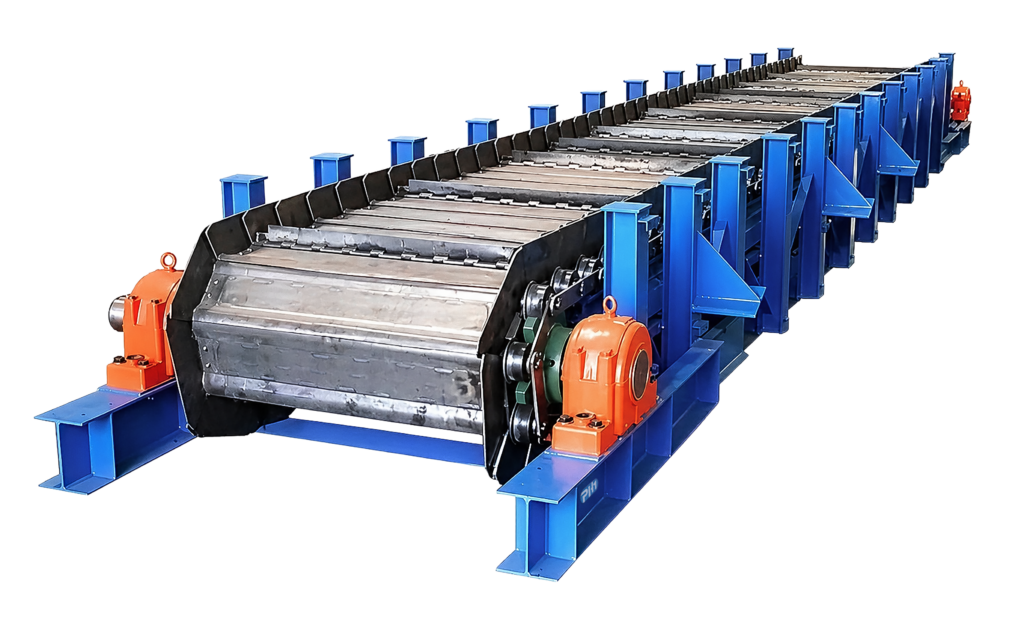
Apron Conveyor
Extreme-Duty Conveying for Hot & Heavy Bulk Materials
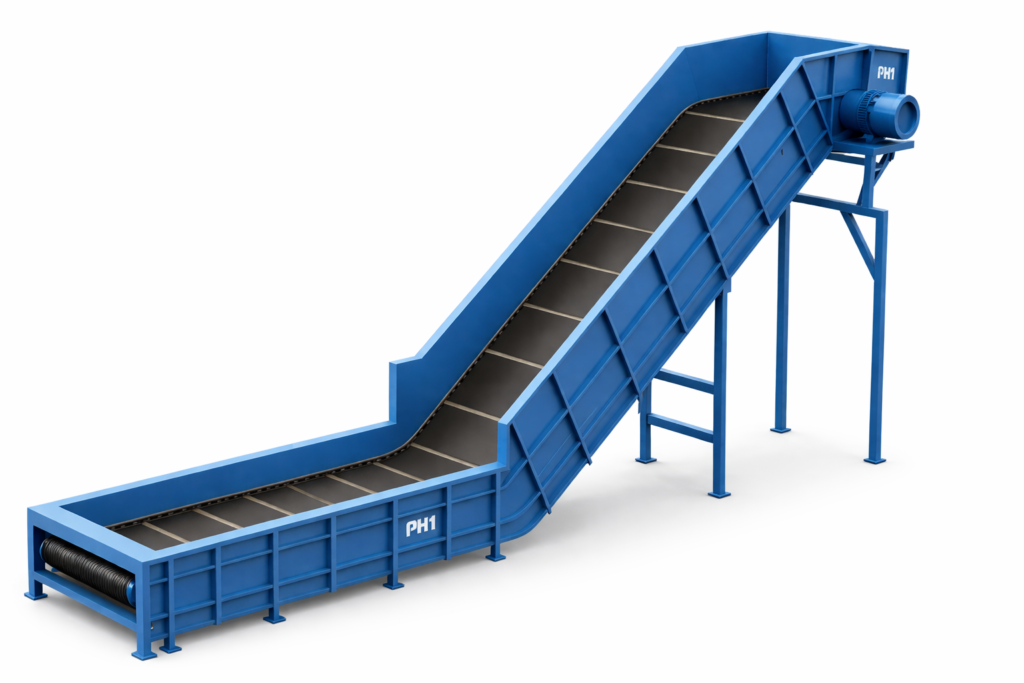
PH1 Apron Conveyors are engineered for the reliable transportation of hot, abrasive, and heavy bulk materials in the most demanding industrial environments. Designed with robust steel pans and heavy-duty chain assemblies, they deliver dependable performance under high-impact loading conditions where conventional conveying systems are unsuitable.
Key Features
Heavy-duty steel pan and chain construction
Pan widths from 500 mm to 1,500 mm
Load capacities up to 2,000 kg/m
Handles material temperatures up to 600°C
Low-speed, high-torque operation for reduced wear
Available in open or enclosed configurations
Integrates seamlessly with hoppers, crushers, and feeding systems
Designed for continuous operation in harsh industrial conditions
Benefits
Ideal for conveying hot, abrasive, and high-impact materials
Exceptional durability and long operational life
Reduced maintenance and extended service intervals
Reliable material flow in critical process areas
Protects downstream equipment from impact loading
High performance in demanding industrial applications
Typical Applications
Hot Clinker & Kiln Discharge Handling
Kiln Reject & Crusher Feed Systems
RDF & Industrial Waste Conveying
Slag, Ore & Large Aggregate Handling
Mining & Mineral Processing
Heavy-Duty Material Transfer in Cement Plants
Chain Conveyors · PH1
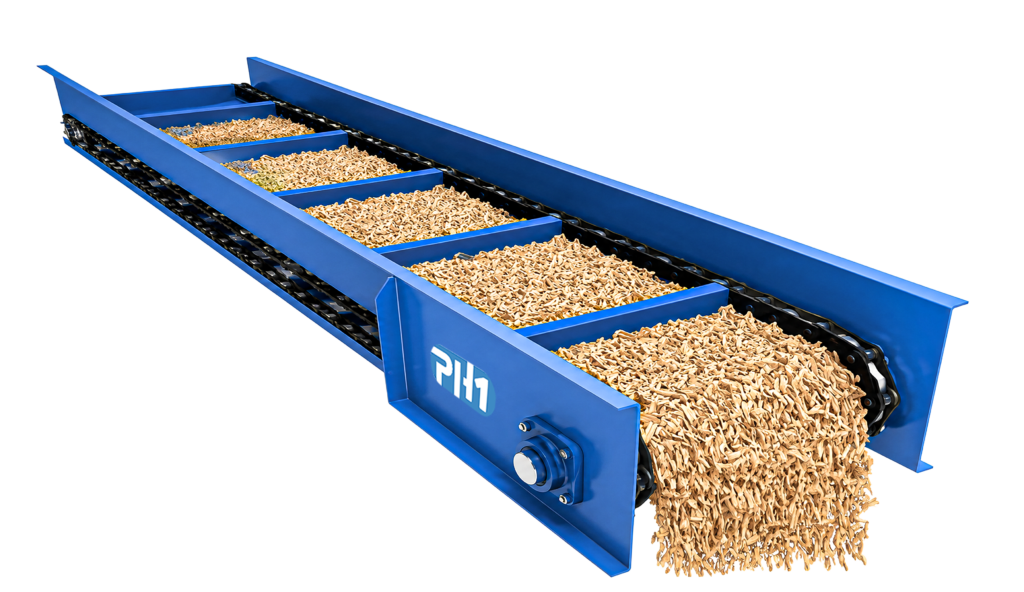
Chain Conveyor
Heavy-Duty Conveying for Tough Bulk Materials
PH1 Chain Conveyors are engineered for the reliable transportation of heavy, coarse, abrasive, and irregular bulk materials in demanding industrial environments. Built for low-speed, high-torque operation, they ensure dependable material movement with exceptional durability, making them ideal for applications where conventional conveying systems may be unsuitable.
Key Features
Heavy-duty construction for abrasive and high-impact materials
Conveyor widths from 300 mm to 1,500 mm
Load capacities up to 2,000 kg/m
Low-speed, high-torque operation for smooth material handling
Available with roller, slat, flight, or drag chain configurations
Open or enclosed trough designs for application-specific requirements
Optional VFD control for regulated conveying
Modular construction for easy maintenance and long service life
Benefits
Handles heavy, coarse, and difficult bulk materials with ease
Reliable operation under demanding industrial conditions
Reduced wear through low-speed conveying
Low maintenance and extended service life
Minimal material spillage and improved operational safety
Flexible configuration for horizontal and inclined conveying
Typical Applications
Clinker & Raw Material Handling
RDF, Biomass & Alternative Fuel Conveying
Ash, Slag & Industrial Residue Handling
Mining & Mineral Processing
Waste-to-Energy & Recycling Plants
Heavy Industrial Material Handling
Screw Conveyors · PH1
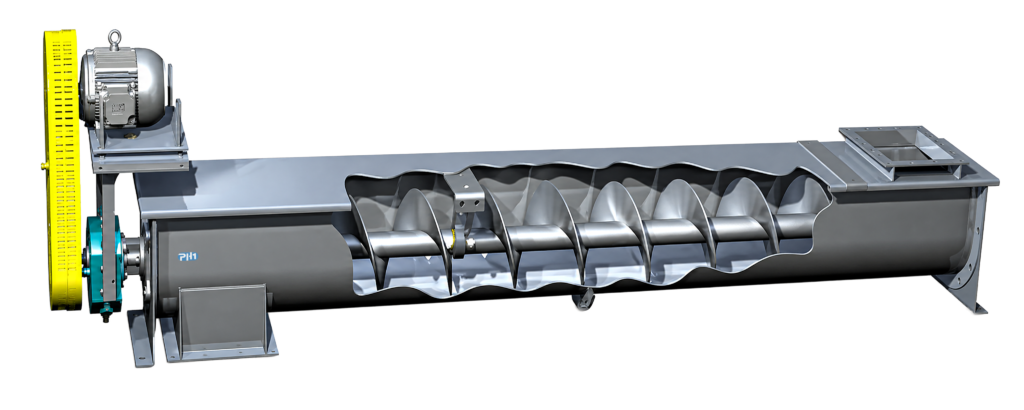
Screw Conveyor
Compact & Controlled Conveying for Precision Material Handling
PH1 Screw Conveyors are engineered for the efficient transport of bulk materials over short distances where controlled, enclosed conveying is essential. Designed for powders, granules, and challenging alternative fuels, they provide reliable material movement while ensuring precise feeding, minimal spillage, and efficient use of plant space.
Technical Specifications
Compact design for space-constrained installations
Screw diameters from 100 mm to 800 mm
Conveying capacities up to 300 TPH
Variable speed operation with optional VFD control
Shafted or shaftless screw configurations for diverse materials
Fully enclosed construction for dust-free conveying
Available in horizontal and inclined configurations
Heavy-duty construction in Mild Steel, Stainless Steel, or Hardox
Benefits
Precise and controlled material feeding
Ideal for powders, granules, and difficult bulk materials
Enclosed design minimizes dust and material loss
Energy-efficient operation with low maintenance
Reliable performance in demanding industrial environments
Flexible integration into new and existing process layouts
Typical Applications
Cement Raw Meal, Dust & Additive Handling
RDF, Biomass & Alternative Fuel Conveying
Sludge & Industrial By-product Handling
Hopper, Silo & Weigh Feeder Feeding
Waste-to-Energy & Recycling Plants
Industrial Process & Manufacturing Facilities
Bucket Elevators · PH1
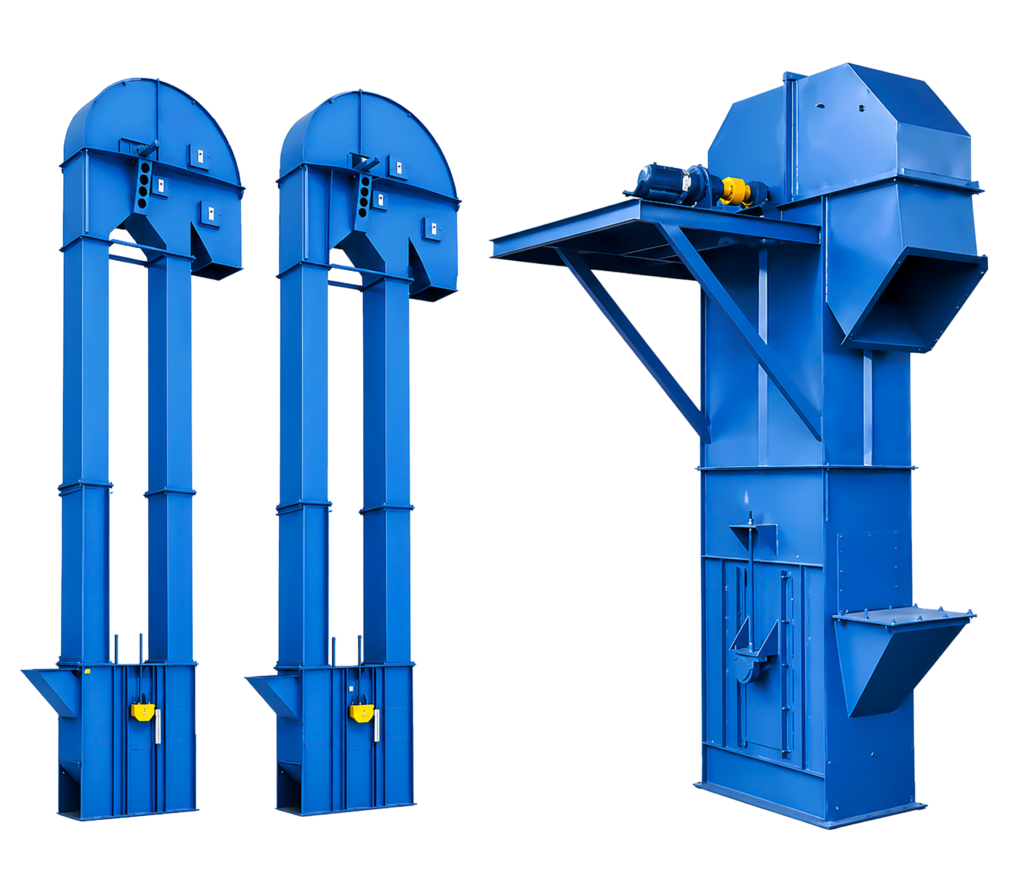
Bucket Elevators
Efficient Vertical Lifting for Bulk Materials
(Maximize Your Floor Space with High-Capacity Vertical Transport)
Bucket Elevators are the most efficient and space-saving solution for vertical or steep inclined transport of bulk materials in cement plants, waste-to-energy facilities, mining operations, and industrial manufacturing units. Designed to lift materials reliably from lower elevations to higher process points, PH1 Industries Bucket Elevators ensure continuous, dust-free, and high-capacity material movement where floor space is limited.
Ideal for handling coal, lime stone, Coke, RDF, biomass, clinker, aggregates, cement, ash, and industrial bulk solids, bucket elevators play a critical role in modern bulk material handling systems.
Key Features
High-Capacity Vertical Lifting in a Compact Footprint
Designed for vertical and steep inclined conveying where floor space is limited.
Capable of handling throughputs from 10 TPH up to 600 TPH (and higher on request), depending on bucket size, spacing, and speed.
Lift heights ranging from 5 to 45 meters, extendable to suit plant layout and process requirements.
Continuous Bucket & Belt / Chain Conveying System
Uses a continuous bucket loop mounted on a reinforced belt or heavy-duty chain, ensuring stable and uninterrupted vertical material transport.
Belt or chain selection optimized based on material abrasiveness, temperature, and duty cycle, ensuring long service life and reliable performance.
Flexible Bucket Sizes & Material Options
Bucket capacities ranging from 1 to 48 liters, allowing precise customization for fine, coarse, wet, dry, or heterogeneous materials.
Buckets available in mild steel, stainless steel, and HDPE, selected based on material characteristics such as abrasiveness, moisture content, and corrosion potential.
Fully Enclosed, Dust-Tight Construction
Fully enclosed casing with dust seals minimizes spillage and dust emissions, making the system ideal for handling cement, ash, RDF, biomass, coal, and fine powders.
Integrated inspection hatches and access doors allow easy monitoring and maintenance without compromising containment.
Heavy-Duty Boot Section for Smooth Loading
Impact-resistant boot section designed to absorb material drop energy and prevent excessive wear.
Optimized inlet geometry ensures smooth material entry, reducing blockages and improving overall elevator efficiency.
Engineered for Continuous Industrial Operation
Built with heavy-duty steel construction for continuous operation in cement plants, AFR systems, mining, and industrial manufacturing facilities.
Designed for reliable performance under abrasive, dusty, and high-load operating conditions.
Benefits
Maximum Vertical Transport Efficiency: Provides a reliable and energy-efficient method for lifting bulk materials vertically, reducing the need for multiple transfer conveyors.
Space-Saving Design: Optimizes plant layout by utilizing vertical space — ideal for congested cement plants, AFR systems, and industrial facilities.
Dust-Free & Clean Operation: Sealed construction minimizes dust emissions and spillage, improving housekeeping and operator safety.
High Capacity with Low Power Consumption: Capable of handling large material volumes while maintaining low specific energy consumption per ton.
Long Service Life & Low Maintenance: Rugged construction, wear-resistant components, and smart safety systems ensure high uptime and reduced lifecycle cost.
Reliability & Safety
Driven by electric motor with gearbox and backstop, ensuring controlled operation and preventing reverse movement under load.
Equipped with overspeed, belt/chain slip, and misalignment protection, enhancing operational safety and reducing unplanned downtime.
Applications Across Industries
Cement Plants
Clinker, cement, coal, additives
AFR materials such as RDF and biomass
Feeding silos, preheaters, and storage bins
Waste-to-Energy & AFR Systems
RDF, SRF, biomass, agro-waste
Ash and process residue handling
Mining & Mineral Processing
Aggregates, crushed ore, minerals
Vertical transfer to screening or storage systems
Industrial Manufacturing
Bulk solids movement within factories
Process feeding in power, steel, and chemical plants
Bulk Material Conveying · PH1
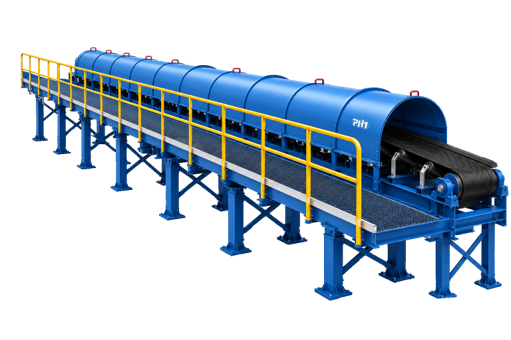
Bulk Material Conveying
Belt Conveyor: Reliable & Efficient Bulk Material Transportation
PH1 Belt Conveyors are engineered for the continuous and efficient transportation of bulk materials across a wide range of industrial applications. Designed for high throughput, long conveying distances, and reliable operation, they ensure smooth material flow while minimizing energy consumption and maintenance requirements.
Technical Specifications
Belt widths from 500 mm to 2000 mm
Conveying capacities up to 4,000 TPH
Variable speed drives (VFD) for optimized process control
Multiple belt options including EP, Nylon, and Steel Cord
Heavy-duty construction for demanding industrial environments
Dust covers, skirting, and enclosure options available
Designed for long-distance and continuous operation
Custom-engineered to suit material and plant requirements
Benefits
High-capacity material handling with low operating costs
Energy-efficient and continuous operation
Reliable performance with minimal maintenance
Reduced material spillage and dust generation
Adaptable to diverse materials and plant layouts
Long service life in demanding operating conditions
Typical Applications
Cement Plants
Mining & Mineral Processing
Waste-to-Energy Facilities
Recycling & RDF Processing Plants
Steel, Power & Chemical Industries
Bulk Material Storage & Handling Systems
RDF/Biomass Drying · PH1
RDF/Biomass Drying
Why Drying Matters?
Moisture in RDF, biomass, or waste-derived fuels drastically reduces their calorific value, increases transport cost, complicates storage, and makes firing unstable. Our drying solution — using proven low-temperature belt and conveyor dryers from PH1— removes moisture efficiently, increasing heating value, improving storability, reducing transport weight, and enabling stable AFR firing in your kiln or furnace.
What We Can Dry (RDF / Biomass / Waste-derived Fuels)
Refuse-Derived Fuel (RDF / SRF / MSW) including mixed municipal and industrial waste.
Biomass feedstocks: wood chips, sawdust, bark, agricultural residues, bagasse, agro-waste, sludge, and other biomass or waste-derived materials.
Industrial sludge, sewage sludge, paper sludge and other waste sludges — converting waste to usable dry fuel or RDF/SRF.
Benefits
Increases Calorific Value & Fuel Quality: By reducing moisture content, the drying line enhances the calorific value of RDF/biomass, enabling higher AFR substitution and more stable combustion.
Improved Storability & Handling: Dried material is lighter, easier to store, handle, and transport; reduced weight also lowers logistics costs.
Consistent Fuel Quality Despite Variability: PH1 dryers are engineered to handle highly variable input materials (inhomogeneous waste/biomass) and adapt drying conditions accordingly.
Energy-Efficient & Environmentally Friendly: Low-temperature belt and conveyor dryers reduce energy consumption; some variants recover heat or utilize waste heat sources, reducing OPEX.
Better Combustion & Kiln Stability: Uniform moisture reduction and controlled drying improve combustion consistency, reduce clinker/refractory stress, and support reliable AFR usage.
Features
Low-temperature belt / conveyor dryer technology: Suitable for mixed waste, RDF, biomass, sludge, and other feedstocks; ensures gentle, uniform drying without damaging material quality.
Modular & Customizable Dryers: Dryer types (belt, conveyor, recirculating, mobile) chosen based on input material type, moisture content, throughput, and project needs.
Heat source flexibility: Dryers can use waste heat, steam, thermal oil, or low-pressure hot water, depending on plant availability — optimizing energy use and lowering operating cost.
Automated controls & monitoring: Moisture, temperature, and airflow are monitored and controlled to ensure consistent output and efficient drying.
Dust and emission control options: Many designs include dust reduction, exhaust air treatment or condensation, making the drying process cleaner and environmentally compliant.
Bulker Unloading · PH1
Bulker Unloading
High-Capacity Pneumatic Conveying for Bulk Carbon Black
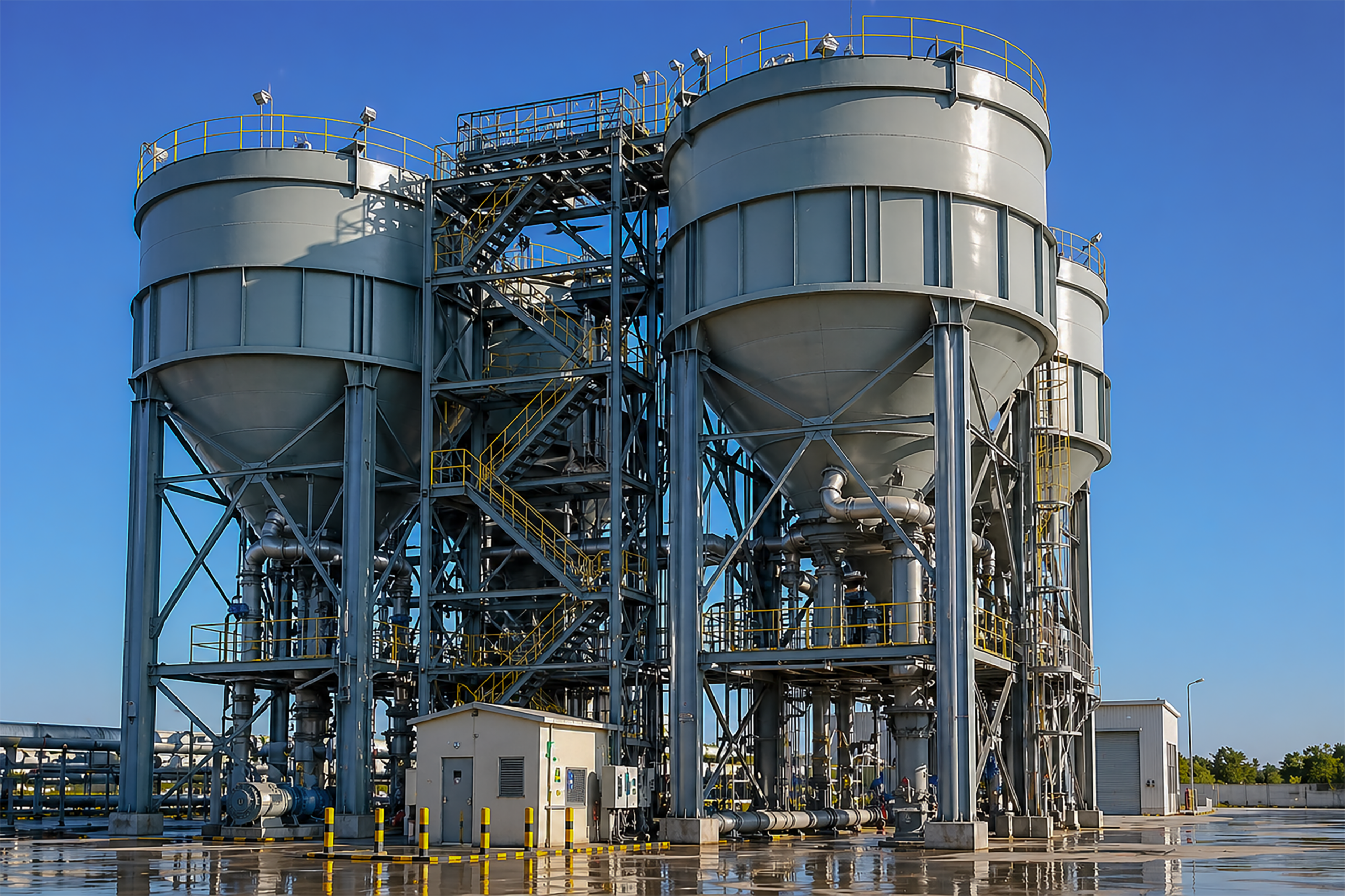
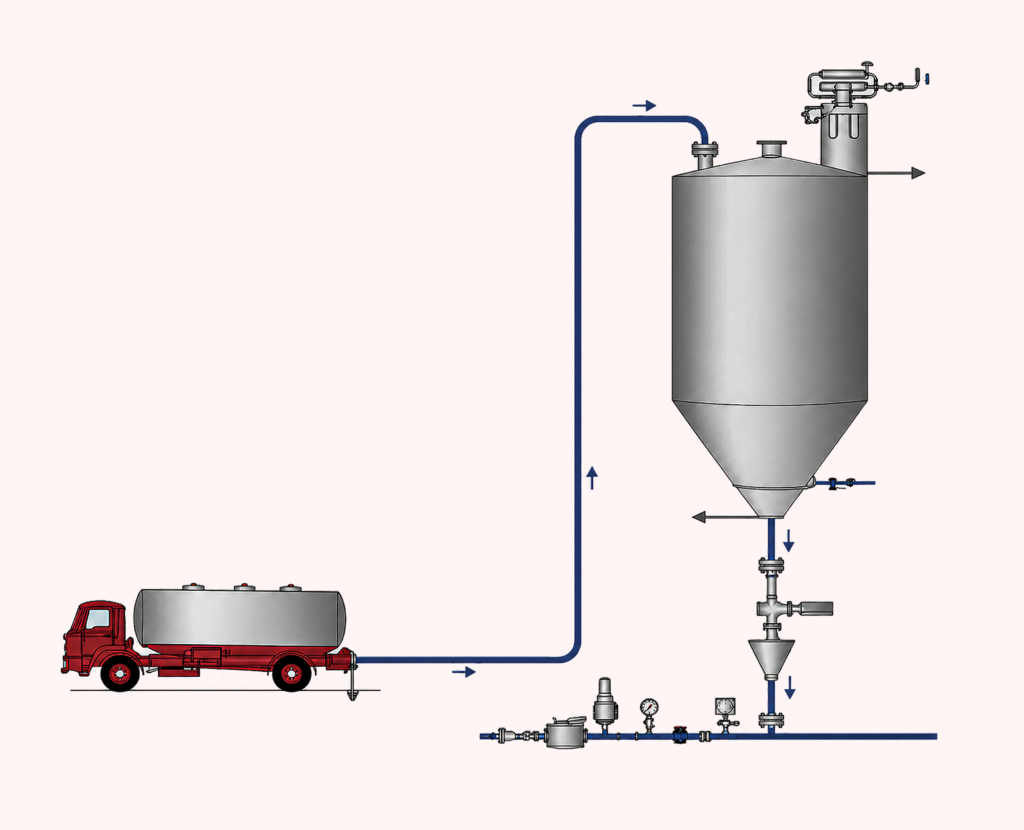
Bulker Unloading systems are designed to unload carbon black from bulk transporters or bulk containers (bulkers). This system is optimized for high-capacity, cost-effective operations, making it a preferred choice for large-scale plants or facilities that need to handle large quantities of carbon black.
Working
Bulker Connection: Bulk containers (bulkers) are connected to the pneumatic unloading system via sealed couplings.
Vacuum/Pressure Conveying: Pneumatic conveyors transport carbon black from the bulker to storage silos or feeding systems.
Flow Control: Valves and sensors regulate the material feed to prevent overloading and ensure continuous operation.
Dust Containment: Cyclones, filters, and sealed lines maintain dust-free conveying throughout the system.
Integration with Plant Systems: Material is delivered directly to AFR feeders, silos, or dosing systems, ready for co-processing or blending.
Benefits
Fast, continuous unloading of bulk carbon black with minimal manual intervention.
Dust-proof pneumatic conveying protects operators and the plant environment.
High flexibility for direct integration into AFR feeding and storage systems.
Reduced handling and labour costs, increasing operational efficiency.
Jumbo Bag Unloading · PH1
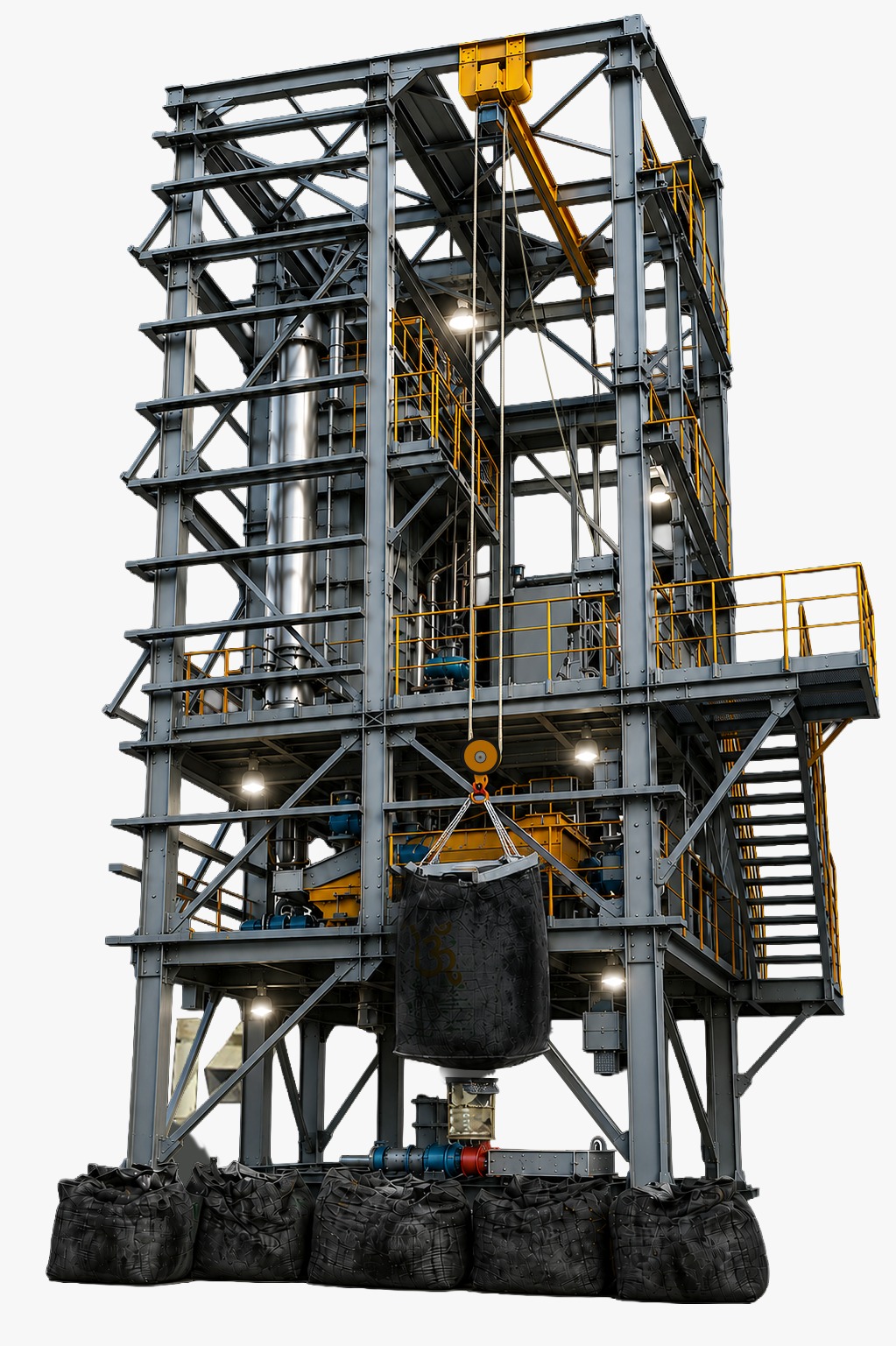
Jumbo Bag Unloading
Efficient, Dust-Free Handling of Carbon Black & Bulk Powders
Jumbo Bag Unloading systems are designed to handle large quantities of carbon black that come in bulk bags (or jumbo bags). These systems offer a cost-effective and efficient solution for plants with limited space and those that require flexible handling options.
Working
Bag Handling & Positioning: Jumbo bags are securely lifted and positioned above the unloading station using hoists or cranes.
Dust-Controlled Discharge: Bag contents are discharged into the system via sealed spouts, preventing dust release and ensuring a clean working environment.
Material Flow Regulation: Integrated valves or feeders regulate the flow of carbon black into downstream conveyors or hoppers.
Integration with Storage/Feeding Systems: Unloaded material is directed to AFR feeding, batching, or storage systems for further processing.
Safety & Ergonomics: Designed for operator safety with minimal manual handling and dust exposure.
Benefits
Dust-free operation for safe handling of fine carbon black powders.
Controlled material flow ensures consistent feed rates to downstream systems.
Enhanced operational safety with reduced manual handling.
Flexible integration into cement plant or AFR co-processing lines.
Efficient handling of high-volume bags, minimizing unloading time and labour.
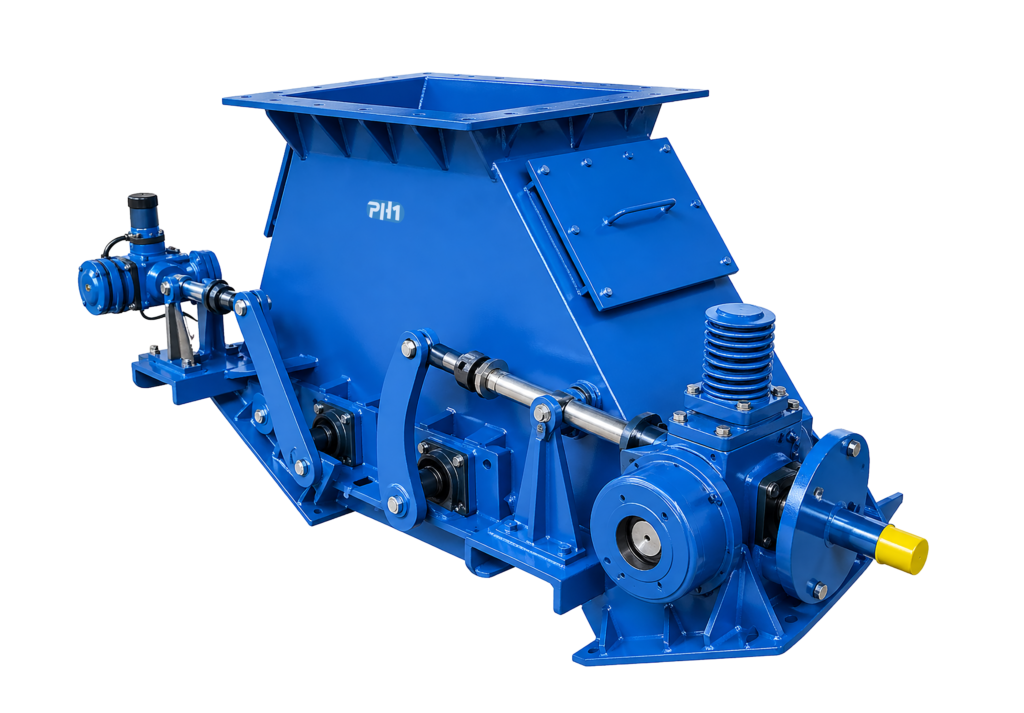
Rotary Air Lock Valve · PH1
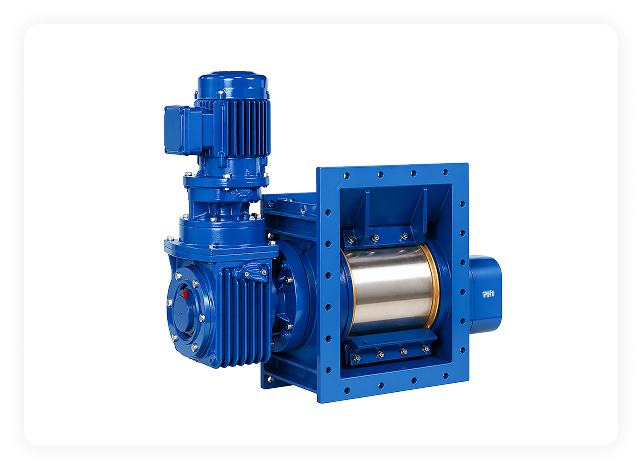
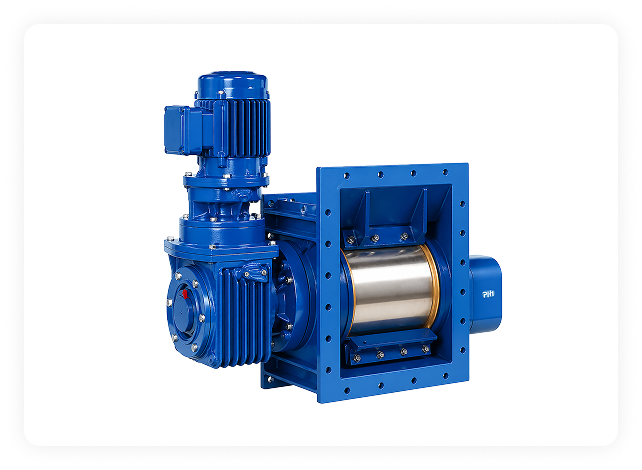
Rotary Air Lock Valve
High-Rate AFR Feeding with Superior Sealing
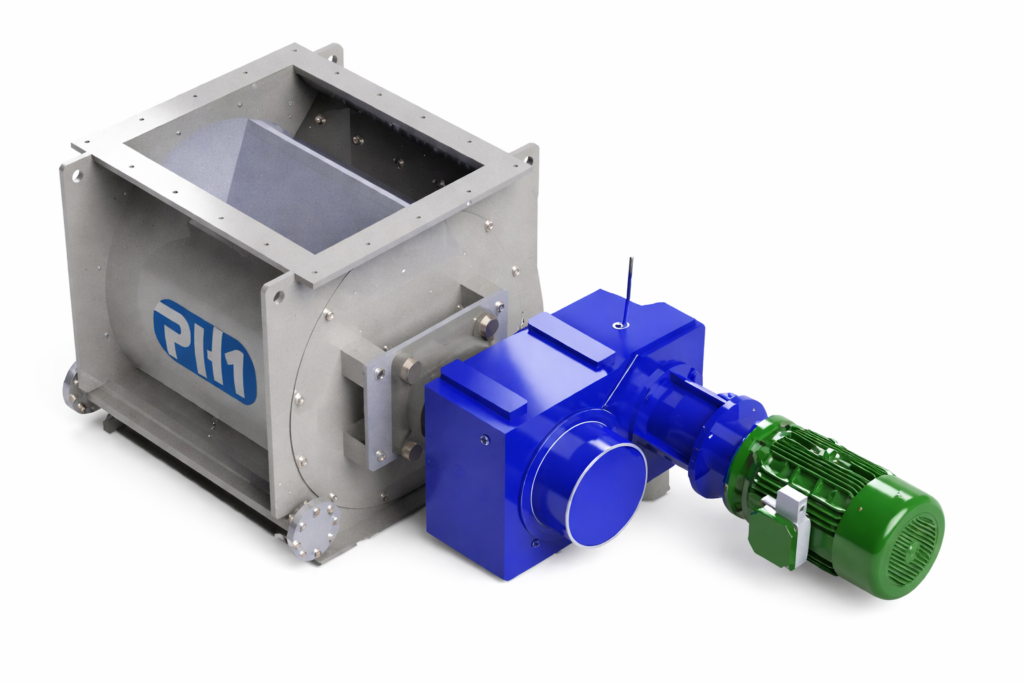
PH1’s Rotary Air Lock Valve is a flagship AFR feeding system designed for high feed rates, precise material flow, and superior sealing in cement plants and waste-to-energy (WTE) facilities. Engineered for durability, efficiency, and safety, it is ideal for handling RDF, biomass, and other alternative fuels in large-scale co-processing operations.
Technical Specifications
Robust industrial construction engineered for continuous heavy-duty operation
High sealing efficiency to minimize air ingress and maintain system pressure
Integrated cutting mechanism for smooth handling of fibrous and difficult alternative fuels
Pressure-tight rotary sealing for reliable material transfer into pneumatic conveying systems
Designed for high-capacity AFR feeding applications
Heavy-duty rotor and housing for long service life in abrasive environments
Material handling capacity up to 80 TPH
Emergency refractory-lined shut-off gate for rapid and safe material isolation
Low-maintenance design with reliable, continuous operation
Custom-engineered to suit varying fuel characteristics and plant requirements
Benefits
Efficient & Reliable Feeding: Maintains accurate, continuous material flow even at high feed rates, supporting peak plant performance.
Durability & Longevity: Heavy-duty construction reduces replacements and maintenance costs, ensuring long-term reliability.
Optimized Combustion: Controlled feeding and air-tight operation improve calciner efficiency and reduce energy consumption.
Enhanced Safety: Emergency shut-off gate provides an additional layer of protection against operational hazards.
High-rate feeding of AFR materials such as RDF, biomass, and shredded plastics into cement kilns.
Areas requiring air-tight, safe, and continuous material flow.
Large-scale cement or WTE operations demanding high feed capacity and minimal downtime.
Motorized Double Flapped Valve · PH1
Motorized Double Flapped Valve
Superior Sealing & Safety for AFR Systems
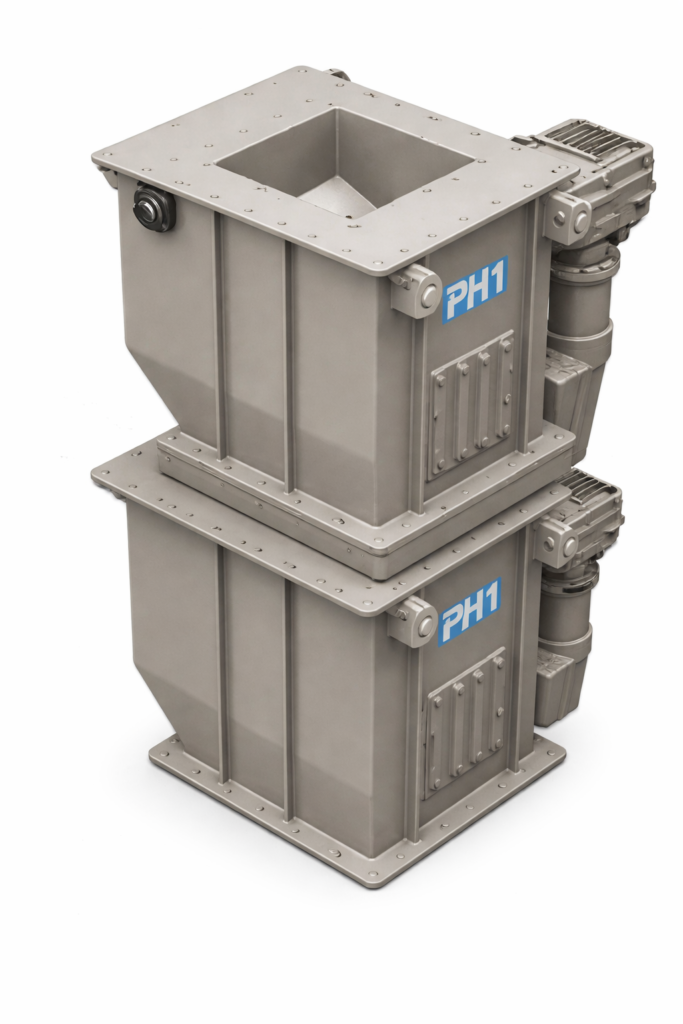
PH1’s Motorized Double Flapped Valve is a high-performance material handling valve designed for cement plants and WTE facilities to ensure precise, safe, and dust-free AFR feeding. Its robust construction, intelligent operation, and advanced sealing technology provide accurate dosing, air-tight operation, and continuous material flow, even in harsh industrial environments.
Technical Specifications
Excellent sealing efficiency to prevent air ingress and material leakage
Pressure- and dust-tight construction for reliable containment of fine and dusty materials
Safety-optimized design for stable operation in high-pressure AFR feeding systems
Intelligent self-clearing flap mechanism to prevent material blockage and ensure continuous flow
Optional online water-jet flap cleaning for reduced maintenance and uninterrupted operation
Suitable for high-pressure pneumatic feeding applications
Heavy-duty construction for continuous industrial duty
Available in sizes from 650 mm to 1400 mm
Fast operating cycle of 6–8 seconds (Open & Close)
Material handling capacity up to 60 TPH
Benefits
Enhanced Sealing: Keeps AFR contained, preventing material loss and maintaining dosing accuracy.
Safety & Cleanliness: Reduces dust emissions and prevents air ingress, creating a safer and cleaner plant environment.
Durable & Reliable: Built for long-term operation in harsh cement plant conditions, withstanding abrasive and high-temperature environments.
Typical Applications
Precise and safe feeding of RDF, biomass, shredded plastics, and other AFR materials in cement kiln and WTE co-processing systems.
Areas requiring dust-tight and air-tight operation, especially in high-pressure feeding zones.
Critical junctions in AFR handling systems where continuous, uninterrupted material flow is essential.
Weigh Feeders · PH1
Weigh Feeders
Precision Weighing & Controlled AFR Feeding
PH1’s Weigh Feeders are a critical component in solid AFR feeding and co-processing systems for cement plants and waste-to-energy (WTE) facilities, ensuring accurate, reliable, and continuous dosing of alternative fuels and raw materials (AFR). Designed with advanced PLC-based controls, these systems deliver precise weighing and feeding to optimize blending, reduce material losses, and enhance overall plant profitability.
Key Features
High-precision weighing and feeding powered by a PLC-based control system for consistent and repeatable AFR dosing.
Continuous feedback loop from highly sensitive load cells, ensuring real-time correction of feed rates and uninterrupted material flow.
Designed for 24/7 continuous operation, delivering high reliability and minimal downtime in demanding co-processing environments.
Simplified calibration process with fewer parameters, enabling quick setup and easy operational adjustments.
Integrated data backup and communication capability, with Profibus connectivity for seamless integration into plant-wide automation and control systems.
Benefits
Accurate AFR dosing reduces fuel wastage and improves thermal substitution efficiency.
Optimized blending and process stability, ensuring consistent kiln and calciner performance.
Lower operational losses and higher profitability through precise material control.
User-friendly operation with reduced calibration effort and simplified maintenance.
Real-time monitoring and data-driven insights, supporting performance analysis, troubleshooting, and continuous improvement.
Seamless integration with existing cement plant and WTE automation systems.
Typical Applications
Precise feeding of RDF, biomass, shredded plastics, and other solid AFR into kiln, calciner, or blending systems.
Co-processing installations where accuracy, repeatability, and process control are critical.
Cement and WTE plants targeting higher AFR substitution rates and stable long-term operation.
Crown Feeder · PH1
Crown Feeder (AFR Splitter)
Precision Feeding for Low-Density AFR Materials
PH1’s Crown Feeder (AFR Splitter) is a specialized dosing and distribution system designed for accurate and continuous feeding of low-density, fluffy alternative fuels (AFR) into cement kiln calciners. Engineered to handle challenging materials such as biomass, plastics, and RDF, it ensures smooth material flow, precise dosing, and stable combustion performance.
A key advantage of the Crown Feeder is its ability to diversify RDF and AFR streams into two independent feed points, allowing optimized fuel distribution within the calciner or kiln system. This improves combustion stability, enhances thermal substitution rates, and increases overall process efficiency, supporting cement plants in achieving higher sustainability and alternative fuel utilization targets.
Technical Specifications
Optimized for Low-Density Materials: Handles fluffy and lightweight AFR materials that are difficult to feed, preventing spillage, blockages, and uneven kiln feeding.
Screw Extractors for Flow Control: Precisely regulate the material flow from hoppers or bins, ensuring consistent delivery into the calciner.
External Apron Weigh Feeder Integration: Provides high-accuracy dosing, reducing underfeeding or overfeeding and improving combustion control.
High Turn-Down Ratio: Adapts to variable fuel supply and low feeding rates while maintaining operational efficiency.
Operational Flexibility: Capable of handling diverse AFR materials and variable process conditions, ensuring uninterrupted operation.
Reliable & Durable Construction: Heavy-duty design for long-term performance in harsh cement plant environments.
Key Benefits
Enhanced Dosing Accuracy: Ensures precise fuel delivery, optimizing material efficiency and kiln performance.
Improved Combustion Efficiency: Accurate feeding enables consistent AFR burning, maximizing energy recovery and reducing fossil fuel use.
Versatile Material Handling: Effectively manages low-density, fluffy fuels that traditional feeders struggle with, increasing plant flexibility.
Cost Savings: Reduces material wastage, minimizes energy consumption, and lowers reliance on expensive fossil fuels.
Feeding low-density AFR materials such as biomass, RDF, and shredded plastics into cement kiln calciners.
Ensuring accurate and continuous dosing in high-turnover co-processing operations.
Supporting sustainable cement production through reliable alternative fuel integration.
Apron Feeder · PH1
1. Apron Feeder
Robust AFR Feeding in High-Temperature Environments
PH1’s Apron Feeder is a highly durable and efficient material feeding system, designed for cement plants and waste-to-energy (WTE) facilities operating in high-temperature, space-constrained, and challenging industrial environments. Ideal for feeding alternative fuels and raw materials (AFR) near calciner chutes, it ensures reliable, precise, and continuous material flow under extreme conditions.
Key Features
High-Temperature Operation: Engineered for harsh zones near calciner chutes, capable of handling temperatures up to 150°C without compromising performance or feeding accuracy.
Compact & Space-Efficient Design: Ideal for short conveying distances and tight installation areas, fitting seamlessly in restricted plant layouts.
Durable & Robust Construction: Heavy-duty components designed to handle abrasive and rugged AFR materials, ensuring long-term reliability.
High-Temperature Variants: Maintain precise measurement and consistent feeding in extreme conditions, supporting optimized combustion in the calciner.
Reliable Operation in Harsh Conditions: Built to withstand dust, heat, and abrasion while maintaining smooth, accurate material handling.
Key Benefits
Efficient High-Temperature Handling: Smooth, continuous feeding of AFR materials even under extreme conditions, enhancing combustion efficiency and minimizing downtime.
Space Optimization: Compact design ensures efficient utilization of limited floor space, critical for high-density cement plant layouts.
Accurate Material Control: Delivers consistent and precise fuel quantities for optimal combustion and reduced material wastage.
Durability & Low Maintenance: Rugged construction ensures long operational life with minimal service, lowering operational costs.
Versatility for Various AFR: Capable of conveying RDF, biomass, shredded plastics, and other alternative fuels, reducing the need for multiple feeding systems.
Typical Applications
Feeding alternative fuels and raw materials (AFR) into calciner chutes in cement plants.
Handling high-temperature, abrasive, or dusty materials with precision and reliability.
Space-constrained plant areas requiring compact, robust feeding solutions.
Chain Belt Conveyor · PH1
Chain Belt Conveyor
Heavy-Duty Bulk Material Transport for AFR & Industrial Waste Handling
The Chain Belt Conveyor is a robust and high-capacity bulk material conveying solution designed for transporting Alternative Fuels and Raw Materials (AFR), RDF, biomass, industrial waste, ash, and other abrasive solid materials over short to medium distances. Widely used in cement plants, waste-to-energy facilities, and RDF processing systems, this conveyor utilizes a chain-driven mechanism to ensure reliable and controlled material transport even under heavy load conditions.
Built for durability, operational stability, and long service life, PH1’s Chain Belt Conveyors are engineered to handle coarse, irregular, and high-density waste fractions where conventional belt conveyors may face limitations.
Benefits
Reliable Handling of Heavy AFR & Waste Materials : Capable of conveying dense, bulky, and irregular materials with high operational stability.
Reduced Maintenance & Operating Costs: Durable construction minimizes wear and reduces maintenance interventions, lowering lifecycle costs.
Long Operational Life: Engineered for continuous industrial operations with high resistance to abrasion and impact.
Flexible System Integration: Easily integrates into complete AFR processing lines, shredding systems, and waste handling plants.
Improved Process Efficiency: Provides consistent material flow, ensuring stable feeding to downstream processing and co-processing systems.
Technical Specifications
Heavy-Duty Load Handling
Designed to transport high-density and abrasive bulk materials, including RDF, biomass, industrial solid waste, and clinker additives.
Supports high conveying capacities, ensuring continuous and reliable material transfer in demanding industrial applications.
Robust Chain Drive Construction
Equipped with wear-resistant chains, heavy-duty sprockets, and reinforced structural components for reliable operation in harsh environments.
Designed to handle high impact loads and abrasive material flow without compromising performance.
Low Maintenance & Long Service Life
Optimized mechanical design reduces component wear and maintenance requirements.
Available in horizontal, inclined, and vertical conveying configurations to suit complex plant layouts.
Seamlessly integrates with shredding lines, screening systems, storage units, and AFR feeding systems.
Controlled & Stable Material Conveying
Provides uniform and slip-free material transport, making it suitable for conveying coarse and irregular waste fractions.
Ensures consistent material feed to downstream AFR processing and kiln feeding systems.
Typical Applications
Transporting RDF, biomass, and alternative fuels within AFR processing systems.
Handling industrial solid waste and coarse reject fractions.
Feeding shredders, screens, separators, and storage bunkers.
Bulk material handling in waste-to-energy and industrial recycling plants.
Supporting co-processing and kiln feeding operations.
Air Assisted Belt Conveyor · PH1
Air Assisted Belt Conveyor
High-Efficiency Material Transport with Air Cushion Technology
PH1’s Air Assisted Belt Conveyor is an advanced solution for transporting AFR (Alternative Fuels and Raw Materials), cement raw materials, and fine powders with minimal friction and improved operational efficiency. Utilizing air cushion technology, this system delivers smoother material flow, reduced wear, energy savings, and enhanced reliability, making it ideal for cement plants and WTE facilities.
Technical Specifications
Air cushion support reduces friction between the belt and support system, enabling smoother, faster transport with lower energy consumption and minimal component wear.
High-efficiency operation reduces maintenance frequency, energy use, and parts replacement, ensuring cost-effective long-term performance.
Dust-proof design with sealing systems prevents material spillage and containment of fine or powdery materials such as RDF or ash, maintaining a clean plant environment.
Optional maintenance walkway provides safe and easy access for inspection, routine servicing, and troubleshooting, eliminating the need for costly support structures.
Benefits
Energy savings through friction reduction, lowering operational costs and supporting sustainability goals.
Reduced maintenance costs due to fewer wear components and lower system strain.
Improved material containment, making it ideal for fine, powdery, or dusty materials.
Space optimization, allowing installation in compact plant layouts with minimal structural requirements.
Enhanced operational safety, with accessible walkways and easier maintenance.
Typical Applications
Continuous transport of AFR materials including RDF, biomass, and shredded plastics.
Handling fine powders or ash requiring dust-proof transport.
Optimizing material flow from storage to feeding, dosing, or firing systems, ensuring uninterrupted operation.
Contributing to energy efficiency and sustainability initiatives by reducing power consumption.
Troughed Belt Conveyors · PH1
Troughed Belt Conveyors
Efficient & Versatile Material Transport
PH1’s Troughed Belt Conveyors are robust and versatile material handling systems designed for the continuous transport of AFR (Alternative Fuels and Raw Materials), cement raw materials, and other bulk solids across various distances and inclines. Ideal for cement plants and waste-to-energy (WTE) facilities, these conveyors ensure reliable, high-capacity material flow with minimal downtime.
Benefits
High throughput and efficiency, moving large volumes of AFR and bulk materials continuously to reduce downtime.
Space optimization with flexible conveyor layouts, enabling installation in compact plant areas.
Durable and reliable construction for handling abrasive, heavy, or bulk materials over long operational life.
Versatile material handling, suitable for RDF, biomass, shredded plastics, limestone, coal, and additives.
Customizable to plant-specific requirements, ensuring seamless integration into existing handling and feeding systems.
Technical Specifications
Belt Widths from 650 mm to 1800 mm to handle a range of material volumes and plant requirements.
Custom-engineered design tailored for optimized material flow and plant layout, enhancing efficiency and reducing operational bottlenecks.
Multiple belting options including rubber, PVC, and specialized fabrics, chosen based on material weight, abrasiveness, and temperature resistance.
Flexible configurations: Horizontal for level transport; Inclined for slight slopes; Steep angle for compact layouts; Chevron belts for bulk materials at higher inclines without slippage.
International standard compliance (BIS, CEMA, DIN) for durability, safety, and operational reliability.
Typical Applications
Transporting AFR materials such as RDF, biomass, and shredded plastics from storage to silos, feeders, or firing systems.
Moving raw materials including limestone, coal, and additives in cement production.
Bulk material handling in applications requiring continuous, high-capacity transport over long distances or steep inclines.
Solidose Extractor · PH1
Solidose™ Extractor
Advanced Hybrid AFR Extraction & Dosing System
PH1’s Solidose™ Extractor is a next-generation solid AFR extraction and dosing system, engineered for cement plants and waste-to-energy (WTE) facilities demanding high throughput, precise feeding, and operational flexibility. Built on an innovative hybrid concept, the Solidose Extractor simplifies co-processing by combining storage, extraction, and accurate dosing into a single, integrated solution.
Technical Specifications
Hybrid extraction technology combining the advantages of a Box Extractor and Apron Extractor into one advanced system, ensuring reliable material discharge and controlled flow.
High-precision dosing capability delivering consistent and accurate AFR feed rates, essential for stable kiln and calciner performance.
Flexible material feeding options, allowing direct tipping from trucks, wheel loaders, JCBs, cranes, or belt conveyors, adapting easily to varied plant logistics.
High storage volume with high throughput capacity, supporting continuous AFR feeding at rates of up to 60 TPH.
Integrated, compact design that reduces system complexity and streamlines co-processing operations.
Benefits
Simplified AFR co-processing by combining extraction and dosing in a single system, reducing equipment interfaces and operational risk.
Improved kiln stability and thermal substitution rates through precise and repeatable AFR dosing.
High operational flexibility, enabling seamless handling of RDF, biomass, agro-waste, industrial residues, and other solid alternative fuels.
Reduced downtime and maintenance, thanks to a robust, hybrid design optimized for continuous operation.
Future-ready AFR solution, scalable for increasing alternative fuel substitution targets.
Typical Applications
High-capacity solid AFR feeding and dosing for cement kiln and calciner co-processing.
WTE plants requiring accurate and stable solid fuel feeding with flexible material reception.
AFR facilities looking to replace multiple extraction systems with a single, high-performance solution.
SlidingFloor™ Extractor · PH1
SlidingFloor™ Extractor
High-Capacity AFR Extraction System
PH1’s SlidingFloor™ Feeder is the flagship solution for high-capacity solid AFR extraction and co-processing, engineered for cement plants and waste-to-energy facilities requiring continuous, reliable material flow with large storage capacity.
Technical Specifications
Activated sliding floor extraction system ensures smooth, controlled, and continuous material discharge, even with difficult and heterogeneous AFR materials.
High bunker storage capacity ranging from 60 m³ to 200 m³, supporting large-scale AFR operations and uninterrupted feeding.
Highly versatile design capable of handling a wide range of alternative fuels, including RDF, biomass, shredded plastics, agro-waste, and industrial residues.
Accurate and constant volumetric flow, ensuring stable feed rates critical for downstream conveying, dosing, and firing systems.
Large holding capacity of approximately 20 – 25 tons, based on typical AFR bulk densities, enabling extended operation between refills.
High Throughput of up to 60tph
Benefits
Unmatched storage and buffering capability, reducing refill frequency and improving overall plant availability.
Improved operational efficiency through precise and continuous AFR extraction with minimal manual intervention.
Universal applicability across lightweight and heavier solid fuels, making it a future-ready AFR solution.
Reduced downtime and operational risk, thanks to automated extraction and blockage-free material flow.
Optimized space utilization, delivering high capacity without excessive civil or layout requirements.
Typical Applications
Continuous feeding of RDF, biomass, shredded plastics, and other solid AFR into handling, dosing, or firing systems.
Cement plants with high AFR substitution targets requiring reliable, constant fuel supply for co-processing.
Large-scale AFR facilities where buffer storage, volumetric accuracy, and operational continuity are critical.
Box Extractor · PH1
Box Extractor
Foundation of Solid AFR Extraction Systems
PH1’s Box Feeders are compact and efficient extraction systems designed for controlled feeding of solid alternative fuels and raw materials (AFR) into co-processing systems for cement plants and waste-to-energy facilities.
Key Features
Low-capacity AFR feeding solution ideal for small to medium co-processing facilities, offering a practical and cost-effective extraction method.
Hopper capacity ranging from 5 m³ to 80 m³, suitable for varying storage and feeding requirements.
Hopper with apron conveyor and stripping wheel ensures controlled material extraction, preventing clogging and overfeeding while maintaining a consistent feed rate.
Low feeding height design enables easy loading using standard loaders or JCBs, eliminating the need for specialized equipment.
Compact footprint allowing seamless installation in facilities with limited available space.
Ramp-free operation, significantly reducing civil construction costs and freeing up valuable plant area.
Benefits
Reduced CAPEX and civil costs by eliminating ramps and minimizing structural requirements.
Improved operational efficiency through smooth material discharge and continuous, interruption-free feeding.
High flexibility in handling a wide range of solid AFR materials, including RDF, biomass, and shredded plastic fuels.
Optimized space utilization, making box feeders ideal for retrofit projects and compact AFR installations.
Reliable and consistent extraction, supporting stable downstream conveying and dosing systems.
Typical Applications
Feeding solid alternative fuels into belt weigh feeders, conveyors, and downstream AFR handling systems.
Cement plant and WTE AFR facilities where space constraints, cost efficiency, and reliable extraction are critical.
Handling both lightweight and dense solid fuels with controlled and precise material flow.
Reliable and consistent extraction, supporting stable downstream conveying and dosing systems.
Separating · Air-Based Windshifter
Air-Based Separators / Windshifters
Efficient Light & Heavy Fraction Separation
Air-based separators, commonly known as windshifters, are used in RDF and waste processing lines to effectively separate light combustible fractions from heavy inert materials. Designed for high-capacity operation and abrasive waste streams, these systems play a critical role in improving fuel quality and protecting downstream equipment.
Key Features
Engineered to process abrasive and heavy materials such as glass, stones, inert fractions, and metal scrap without performance degradation.
Capable of handling material sizes up to 600 mm, allowing direct integration after primary or secondary shredding.
High-throughput design with capacities of up to 200 m³/hour, suitable for large-scale RDF and MSW processing plants.
Advanced 3-in-1 separation technology enabling simultaneous separation of light, medium, and heavy fractions at high capacities.
Enclosed system design with negative pressure technology ensures dust-free and environmentally compliant operation.
Benefits
Significant improvement in RDF and SRF quality by removing inert and non-combustible contaminants.
Reduced wear and damage to downstream shredders, conveyors, and fuel handling systems.
Low maintenance design with minimal wear parts, resulting in reduced downtime and lower operating costs.
Cleaner plant environment and improved worker safety due to controlled dust extraction and containment.
Technical Specifications
Capacity: Up to 200 m³/hour*
Feed Size: Up to 600 mm
3-Fraction Air Separation
Adjustable Airflow Control
Fully Enclosed Dust-Controlled Design
Heavy-Duty Modular Construction
Low-Wear Internal Components
Continuous-Duty Industrial Operation
Easy Maintenance Access
Seamless Integration with Recycling Lines
Dynamic Screen · Waste Sizing
Dynamic Screen
Precision Sizing for Mixed and Single-Stream Waste
The Dynamic Screen is a versatile and energy-efficient sizing solution designed for high-throughput waste processing applications. It delivers accurate and consistent material separation across a wide range of waste streams, making it ideal for RDF production, recycling, and waste-to-energy systems.
Key Features
Proven sizing solution for single-stream waste, MSW, C&D waste, wood, compost, green waste, plastics, glass, tires, and industrial residues.
Precisely engineered screen openings ensure accurate and repeatable material sizing.
Custom-designed infeed section tailored to match upstream feeding conveyors for smooth material flow.
Designed for low energy consumption while maintaining high screening efficiency.
Benefits
Consistent, high-quality output fractions for downstream shredding, separation, or RDF conditioning.
Flexible application across multiple waste types, reducing the need for dedicated screening equipment.
Lower operating costs due to energy-efficient design and optimized material flow.
Easy integration into new or existing waste processing and bulk material handling lines.
Technical Specifications
Screening Size: 10–300 mm*
Capacity: Up to 100 TPH*
Single or Multi-Deck Design
Interchangeable Screen Media
Energy-Efficient Vibration Drive
Heavy-Duty Modular Construction
Quick-Access Maintenance Design
Custom Screen Apertures Available
Continuous-Duty Industrial Operation
Easy Integration into Processing Lines
Screening · Flip-Flop Combi Screen
Flip-Flop Combi Screen
High-Efficiency Screening for Difficult Waste Streams
The Flip-Flop Combi Screen is engineered for reliable classification of difficult, sticky, wet, and heterogeneous materials commonly encountered in MSW, industrial waste, RDF, and biomass processing lines. By combining two screening technologies into a single machine, it delivers high separation efficiency while reducing plant complexity and footprint.
Key Features
Classifies challenging waste streams with separation cuts ranging from 0.2 mm to 120 mm, covering fine to coarse fractions.
Advanced vibrating flip-flop technology ensures near blockage-free operation on both upper and lower decks, even with moist or adhesive materials.
3D screening elements on the lower deck ensure accurate grain sizing, preventing the passage of long pieces and unwanted contaminants.
Dual-deck, combined system integrates two screening stages into one compact machine.
Benefits
Reliable screening performance for wet, sticky, and high-contamination waste where conventional screens struggle.
Improved RDF and SRF quality through precise fraction separation and reduced oversize carry-over.
Significant savings in conveying equipment, steel structures, installation space, and overall CAPEX.
Higher uptime and reduced maintenance due to self-cleaning screening action.